
Extraordinary news | Flixton mesolithic landscape for sale

Dear Microburins,

ForSaleExtraordinary news from the Star Carr project team (University of York) is that part of the Vale of Pickering, containing Upper Palaeolithic and Mesolithic wetland archaeology, is on the market for £550,000 or as four lots* – see the links and image below.

*Lots 3 (£125,000, 25 acres) and 4 (£305,000, 61 acres) contain Flixton Island and No Name Hill respectively.

The pasture, under a short-term stewardship agreement, is the location of Flixton Island and No Name Hill which were indeed islands in the post-glacial palaeo-lake Flixton. This is a beautiful landscape and wildlife habitat sitting between the Yorkshire Wolds and North York Moors in an area where tourism is a major economic component. Recent excavations have proven organic preservation under surviving peat that includes a horse butchery site and several Early Mesolithic activity areas. As the project team point out, the risk is that the future owner or owners will not be sympathetic to this special archaeological resource and that, at the end of the stewardship cycle which brings in a modest annual income, agricultural practices may revert to arable, destructive activities. I do note that the archaeological assets are hardly mentioned in the PDF brochure and that only the nearby Star Carr is an archaeological scheduled area – and rapidly drying out.

Flixton-landsale

Microburin comment

Is there any hope that the partnership capabilities of charitable organisations, perhaps with sympathies from national and governmental bodies, might come together in order to purchase the land and secure it for the broader public? The Vale of Pickering is a rich natural (if managed) resource as evangelised by the likes of the Carrs Wetland Project. £550,000 is a modest sum in terms of Heritage Lottery and land management initiatives that receive support. Indeed, compare with the considerable sums raised to rescue treasure trove finds in recent years and the success of crowd-sourcing projects that enable public access to heritage, nature and learning. The Crosby Garret Roman parade helmet sold, regrettably, to a private bidder for £2.3M and yet the Tullie House Museum was able to raise £1.7M in an attempt to secure it. £0.55M seems less daunting?

StarCarrReconWould the very special habitat – and its development as a public asset – not garner the interest of the National Trust and RSPB? After all, they also bring the relevant land management expertise and oversight to conserve complex living landscapes? Is a campaign out of the question?

There is already a Vale of Pickering Trust that supports the archaeological ventures and has done so for many years – so is the coordination vehicle already there?

If only I had the savings, I’d jump at this in a second: more lottery tickets I guess!

Stop Press – Nature offers a great ROI!

Just published today by Natural England, a new report demonstrates the value for money delivered by investing in the natural environment – wetland habitats being an important one – including carbon storage, resilience to climate change, health and well-being, and attractiveness to future investment, tourism and recreation.

“The Monitor of Engagement with the Natural Environment survey demonstrates that in 2012-13, 2.85 billion visits were made to the natural environment with expenditure totalling from £17.6 – £24.5 billion.”

Spence

Microburin update | UK Mesolithic Sites and Finds

Dear microburins,

UK Mesolithic Projects, Sites and Finds page has been updated

FetchamAlso see Mesolithic stories on the microburin scoop.it site | Last updated 15-May-2014
Added | Fetcham, Surrey, England; Cuxton, Kent, England; Dunragit bypass, Dumfries & Galloway, Scotland

The latest updates are from the press and, while quite brief, continue to provide evidence for “Mesolithic everywhere”. The two most recent discoveries are developer-led commercial engagements in England and Scotland.

If you want to refer a media news story or project update, please do post a comment! The more eyes out there, the better – debitage or otherwise.

Spence

Ryedale Folk Museum | Archaeology returns

Gallery

This gallery contains 21 photos.

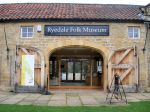
One of my favourite museums in the north of England is the Ryedale Folk Museum in the beautiful village of Hutton-le-Hole on the southern flanks of the North York Moors. It actually sits at the boundary of the high moors—a … Continue reading

Photography, Diplomacy and Grub | 1986 archaeology on a moor in Yorkshire

Dear Microburins.

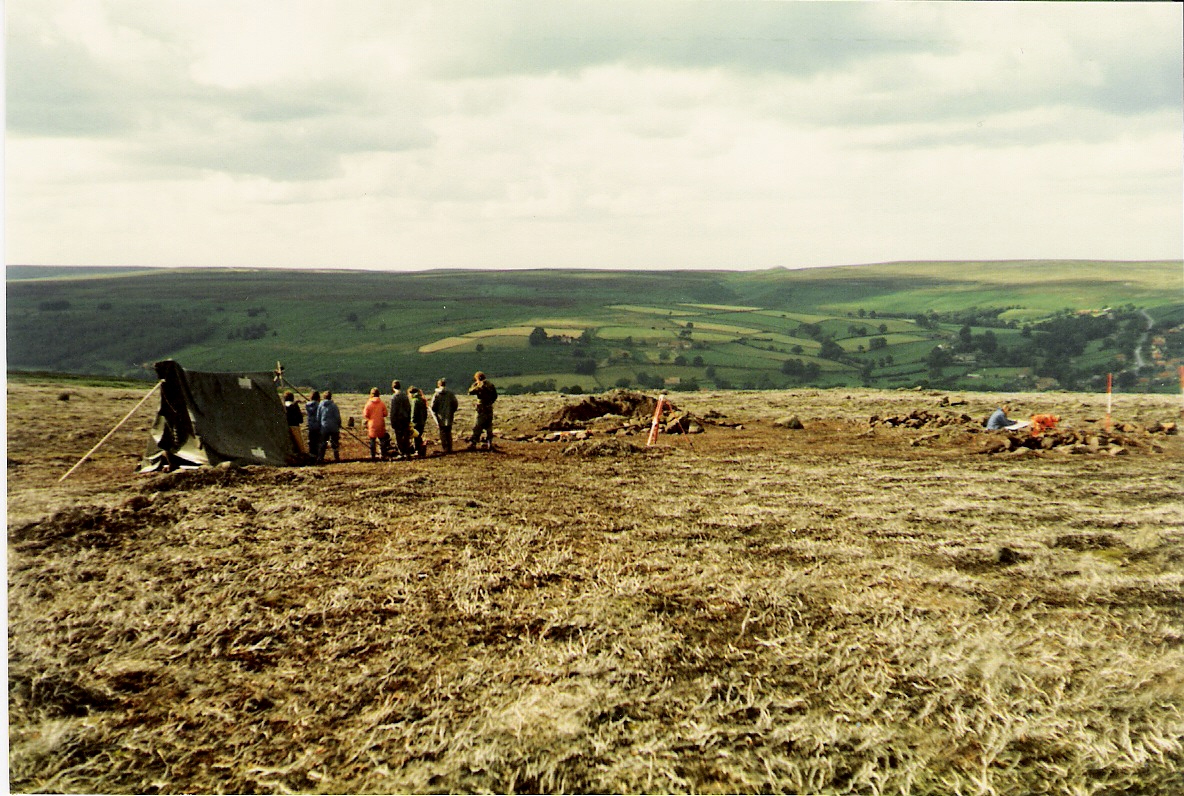
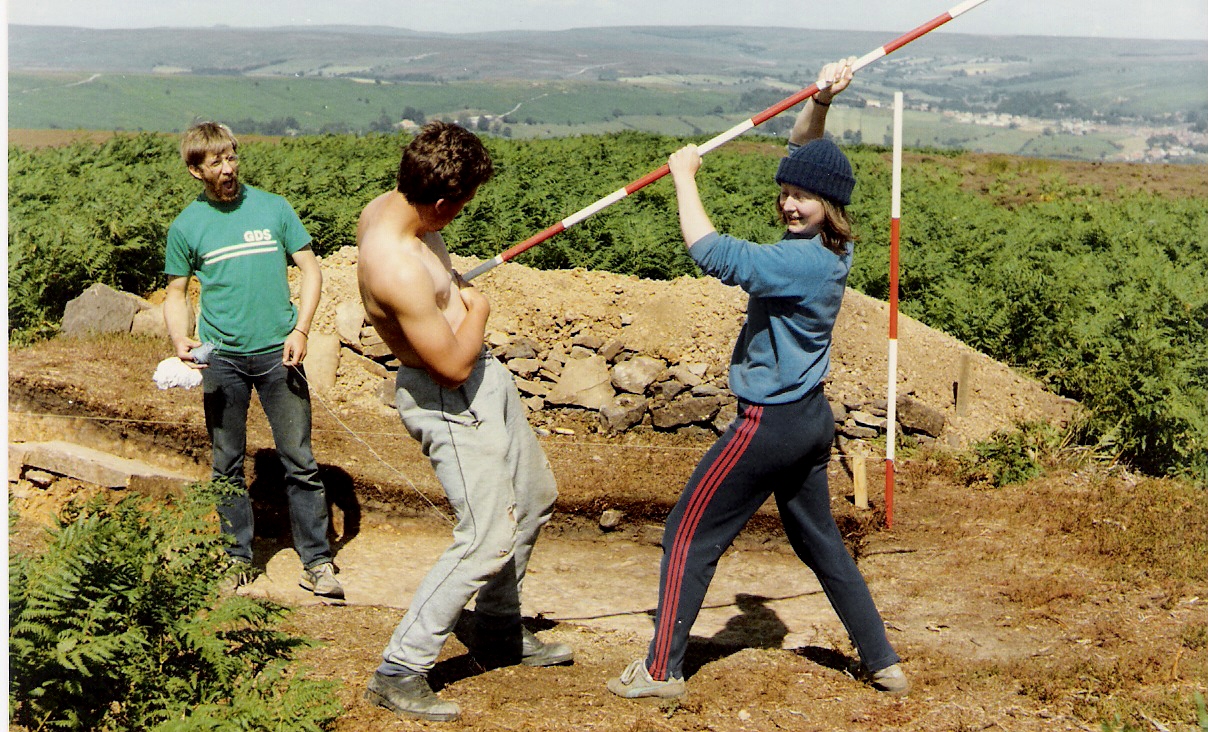
Danby RiggI was flipping through some old (scanned) pictures from the prehistory of my archaeological past and thought you might enjoy these. It’s 1986 throw-back time, the second season investigating the Bronze Age upland landscape on Danby Rigg in the beautiful Esk valley on the North York Moors.

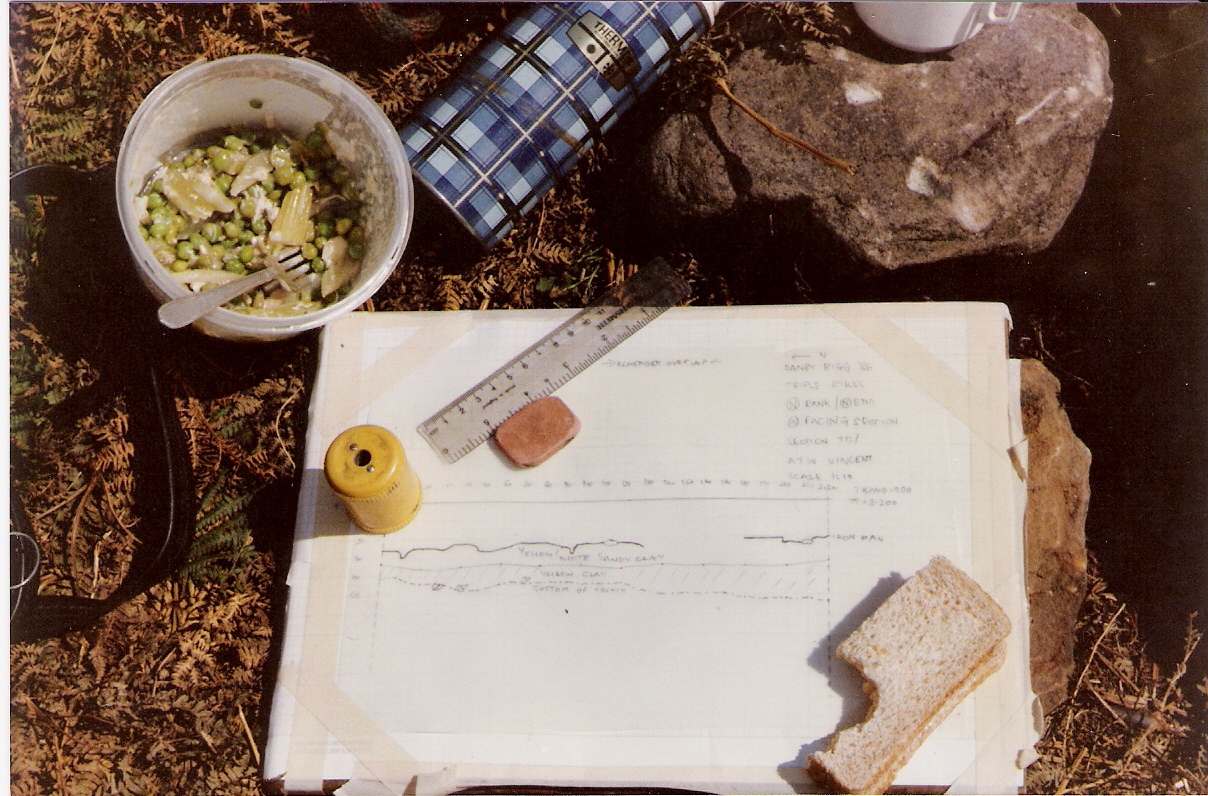
Aerial photography | On-site diplomacy | Sectioned lunch

The Bronze Age triple dykes subsequently radiocarbon dated to the Viking period, which was a surprise. The Durham University project included re-examination of a Bronze Age ring cairn with a large monolith, proving it to have at least one cremation burial.

Ring cairnThe landscape survey plotted the entire network of field systems and cairns hidden under the heather—certainly one of the most comprehensive surveys of its kind in north-east England, and executed before the advent of GPS or Total Station technology, but we did have an EDM. This was all dumpy level and back-sighting. I’m proud to be able to set up a theodolite in five seconds, while sleeping!

There is a tenuous Mesolithic connection in that, on the long walk up to the moor each morning, Microburin discovered a small Mesolithic assemblage at relatively low altitude. It included some blades and a scraper with edge gloss from processing plant materials, but no microliths. A large Mesolithic core was, inevitably, lying at the bottom of the deepest Viking ditch (residual). It’s a bit like the “token” sherd of Roman Samian Ware (posh dinner service crockery) found most other places, no matter what period you’re digging.

AF Harding Danby RiggHarding, A., Ostoja-Zagorski, J. 1994. Prehistoric and Early Medieval Activity on Danby Rigg, North Yorkshire, Archaeological Journal 151, 16-97.

The plans and sections are mostly mine, but some cheeky rascal got the credit.

Spence

Intertidal Prehistoric Peat Beds at Redcar in Cleveland | 2013 Observations

RPB13Stone axes on a Teesside beach

Intertidal peat beds—the “submerged offshore forest”—dating from the mid-Holocene (Later Mesolithic) are well known north of the Tees estuary (north-east England) near Hartlepool and Seaton Carew and attest to rising, or fluctuating, sea levels since the last glacial period 12,000 years ago.

The peat beds south of the Tees at Redcar are less well known and studied. They are infrequently revealed on the beach and span upward of two hectares but extend north and southwards from time to time. A rare opportunity to inspect them this year (July 2013) provided possible evidence for coppicing (or elevated copparding) and one tree stump (Birch – betula) displayed possible stone axe marks executed in a fashion characteristic of the period. Historical finds recorded in the regional Historical Environment Record (HER) are also briefly summarised in this report and include a stone axe (lost, see below), bone and antler faunal remains and flints observed and reported since the 1880s. The beds are now largely recovered by sand until the next opportunity to observe them.

The missing neolithic stone axe

The stone axe find itself, reported in the Middlesbrough Evening Gazette on 15 March 1986 by a dog-walking Mr A Johnson (also shown to the Dorman Museum) remains elusive—lost. I’ve written to the newspaper to see if a rediscovery is possible for proper recording in the Redcar & Cleveland HER database. Mr Johnson also reported a “strange jaw bone”.

Buy the book about hartlepool peat beds

TAmonoVol2_Hartlepool

Visit the Tees Archaeology Shop to buy the research monograph about the peat beds north of the Tees around Hartlepool.

Tees Archaeology Monograph Vol. 2:  Archaeology and Environment of Submerged Landscapes in Hartlepool Bay, England.

Mags Waughman (2005) | £15 (+ £6 p&p).

Acknowledgements

I am grateful to Francis Pryor and Maisie Taylor for commenting on the images.

More Info: Field Observations by Spencer Carter, July 2013
Summary report publication date: Oct 21, 2013 (Academia.edu)
Keywords: Wetland Archaeology, Mesolithic/Neolithic, Mesolithic Archaeology, Redcar

Please note that the peat beds north and south of the Tees are extremely fragile and protected by various legislation (e.g. SSSI). Please treat them with respect and report any observations or finds to the appropriate archaeological bodies. Where possible, leave things where they are and/or take photographs with a scale measure and make detailed notes and sketches about the context. We only ever have one chance, and this shared heritage belongs to all of us.

Regional Archaeological & Heritage bodies

Spence

UK Mesolithic Sites and Finds | Recent updates

toadbootRecent updates to Microburin’s UK Mesolithic Sites and finds page and Scoop.it Microburin news aggregation webpage include:

  • Amesbury, Wiltshire | As the 2013 excavation season of this intriguing wetland site near Stonehenge continues, significant dietary evidence seems—according to press excitement—to include amphibians. But then the media hype this last week, suggesting the “English” ate frogs legs (or toads) before the French, needs some perspective, not least because we were still joined to continental Europe at the time! A partly charred leg bone in a fire hardly constitutes a “come dine with/on me” gastronomic venture? There are many reasons as to how such bones (or a single bone) could have arrived there—and unfortunately we have no human faeces (number twos) to examine. So for me this remains an intriguing but unprovable (if not terribly surprising) possibility—perhaps a leap of faith a little too far for now.

Now, anyone want crabapple chutney on their hedgehog burger? How’s your stoat kebab, Poika?

For an even more skeptical view, read Digital Digging’s blogpost (with a few well-considered profanities) »

  • Bletchingley, Surrey | 2005-06 excavation of extensive flint scatters, pits, hearths and activity areas.
  • Bradford Kaims, Northumberland | Ongoing excavations of an exciting wetland site with Neolithic burnt mounds, Late Mesolithic-into-Neolithic lithics and, this season, a wooden “paddle” that seems to date to the Mesolithic-Neolithic transition and may have been used for moving hot stones versus boating. Bradford Kaims is part of the crowd-funded Bamburgh Research Project.

Spence