Bradford Kaims Neolithic-Mesolithic wetland | Great new video from Bamburgh Research Project

Bradford Kaims is the latest venture of Bamburgh Research Project, working with the local community, volunteers and Universities to investigate a truly remarkable preserved ancient wetland site, located a few miles from Bamburgh, near the village of Lucker in Northumberland. The work has been supported by grants from the Heritage Lottery Fund and English Heritage.
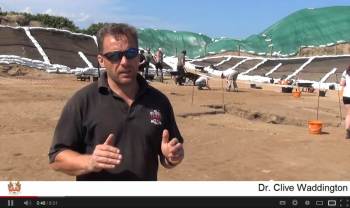
BRP-BK-VideoThis latest short video, one of three, gives an idea of the great potential of the site but also the risks from water table fluctuations and drying—as always adding a sense of urgency to recovery before it’s too late.

“We were very fortunate to have Dr Richard Tipping, an expert in environmental sciences, out with a group of staff and volunteers. His knowledge is extensive and his enthusiasm was definitely infectious. There is something almost magical about preservation properties of peat and the ability of a real expert to read a core sample in the manner of an open book of environmental history.”

The extensive wetland that formed here in the Late Glacial period was a large lake system throughout the Holocene. Pollen and palaeo-environmental evidence recovered from deep auger cores spans the last 12,000 years. Many sites of archaeological interest are known in this area, from Mesolithic and Neolithic scatters, to Bronze Age cairns and votive deposits, Iron Age hillforts and Medieval villages.

Spence | Twitter @microburin

Final day at Low Hauxley | Rescued from the Mesolithic sea

Gallery

This gallery contains 14 photos.

Dear microburins, I thought you might like to see the final pictures from Low Hauxley, Northumberland. The dig was a blast—an incredible, amusing and dedicated crew of volunteers, countless visitors and a community interest that reverberated around the Warkworth, Amble … Continue reading

Yorkshire 9000BC | Fly around Mesolithic Lake Flixton : experience the sounds

Hello Microburins,

Yorkshire9000BC_VimeoHere’s a great short video fly-through the Mesolithic landscape of Lake Flixton, Vale of Pickering, North Yorkshire, England. Ongoing excavations at Star Carr and Flixton Island are the current manifestation of research since the 1950s. This CGI video incorporates  recordings of what the the post-glacial landscape may have sounded like 11,000 years ago, when hunter-gatherers shared their environment with wild ox, bears, beavers, horses, boar, wolves and a hazelnut or two.

“The model is based on pollen cores and archaeological excavations (including the currently active ones). It was created for the Yorkshire Museum’s new ‘Prehistoric Yorkshire’ exhibition in partnership with members of the Star Carr Project at the University of York Department of Archaeology. Sound design is by Jon Hughes.”

Watch and listen now (1m 35s, silent intro) »

Related stuff

Spence

Rescued from the sea | Excavations at Low Hauxley | Island of the dead? (video)

Updated 15-Aug with tsunami article

Click to watchAn ongoing rescue project is taking place in Northumberland where coastal erosion has revealed a Bronze Age “cemetery” burial cairn and evidence back to the Mesolithic. There are flints for sure but also antler and hundreds of preserved footprints in the peat beneath the present beach dated to over 7,000 years ago—adults, children and animals.

More media coverage is promised over the coming weeks, but here’s a great 8 minute video hosted by the inimitable Clive Waddington of Archaeological Research Services Ltd. This is a huge community project with more than 150 local volunteers and over 300 school children involved, supported by the Heritage Lottery Fund, Northumberland Wildlife Trust, Newcastle University, UK Coal and The Leader Project. Clive is well-known for the excavations of a Mesolithic house at Howick, Northumberland—one of the earliest Late Mesolithic structures in Britain, occupied from about 7800 cal BC, repaired and rebuilt over many generations. Will they find similar at Low Hauxley?

Recommended Reading

  • Barton, R.N.E. & Roberts, A. 2004. The Mesolithic period in England: current perspectives and new research, in Saville (2004, 339-58).
  • Passmore, D.G. & Waddington, C. 2012. Archaeology and Environment in Northumberland: Till Tweed Studies, vol. 2 of 2. Oxford: Oxbow.
  • Saville, A. (ed.) 2004. Mesolithic Scotland and its Neighbours. Edinburgh: Soc Antiquaries Scotland.
  • Waddington, C. (ed.) 2007. Mesolithic Studies in the North Sea Basin, a Case Study from Howick, North-East England. Oxford: Oxbow.
  • Waddington, C. & Pedersen, K. (eds) 2007. Mesolithic Studies in the North Sea Basin and Beyond. Proceedings of a Conference held at Newcastle in 2003. Oxford: Oxbow.

Spence

Digging Seamer Carr 1985-6 | A few Mesolithic Memories of VP85

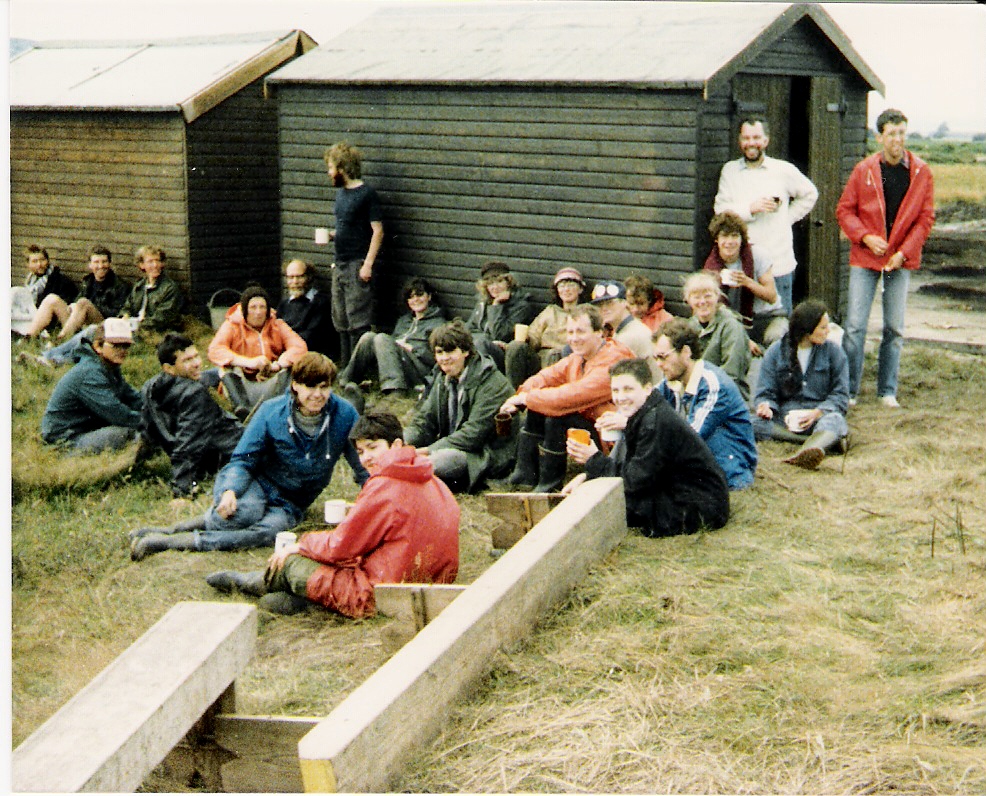
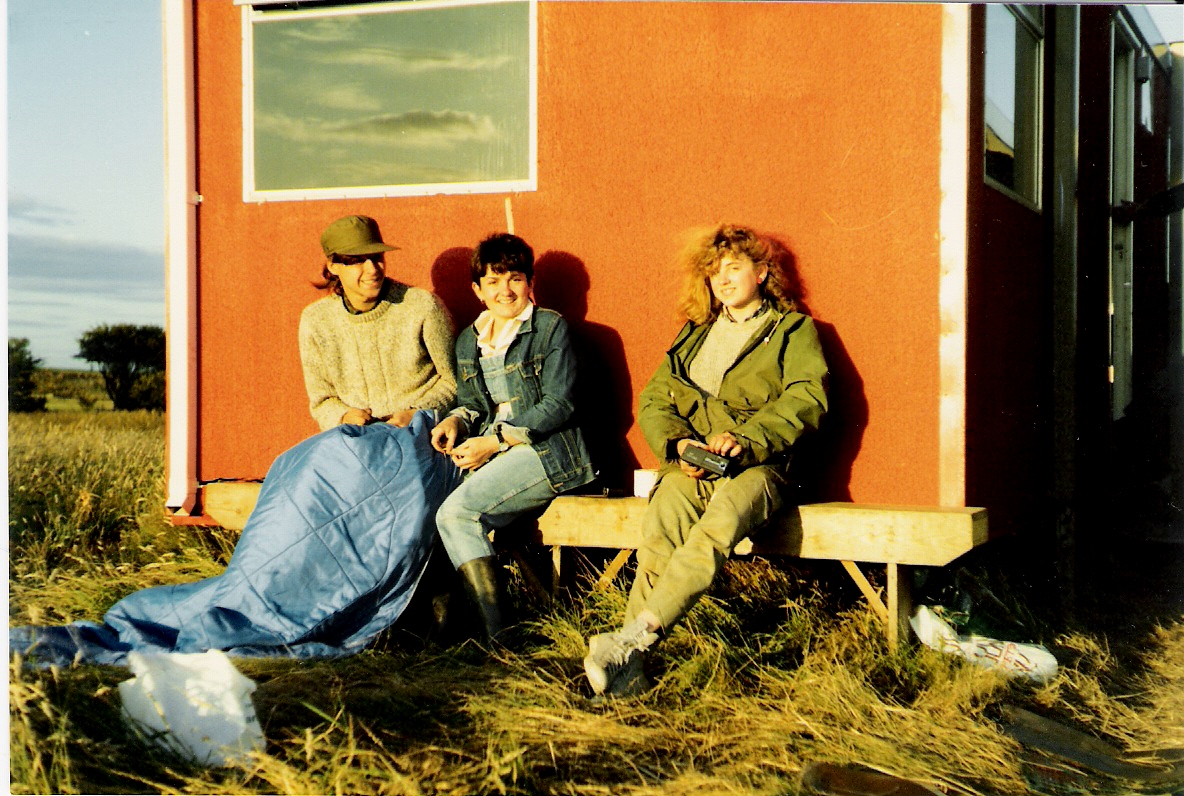
Seamer Carr 1985I came across these old pictures, showing their age a bit (and mine), from the excavations at Seamer Carr, not far from Star Carr in the Vale of Pickering, North Yorkshire.

Located in the path of a whiffy landfill (or more accurately “floating on peat”) site, the open area excavation was part of a bigger environmental project to reveal the extent of post-glacial Lake Pickering (more properly Lake Flixton), on which Star Carr is but one of now many Early and Late Mesolithic activity areas. I like the later stuff most, and at least one microlith array is known (i.e. an arrowhead configuration).

scan0010I was a volunteer under-grad at Durham (1984-7) and when not digging on the North York Moors, East Yorkshire or Poland, recording Anglo-Saxon churches in Tynedale or cataloguing Roman Samian Ware in the Old Fulling Museum attic, I squelched at Seamer Carr and in a few 1x1s at Star Carr.

It rained every day except one. It was one of the coldest summers on record. A force 9 gale laid every tent to waste despite 4 foot stakes—I slept in dad’s car in year 2 and learnt a thing or two about shift gears. We shan’t talk about the Elsan loos, nor about blue not being my favourite colour anymore.

scan0011   scan0009

However, we all delighted in warm team spirit, hot tea, weekly showers, Helen Patterson’s wonderful cuisine, Schadla-Hall dry wit, Ed Cloutman’s auger, fine Yorkshire beer, and laughs at the expense of the last person to be submerged to the waist, or higher, in the sump pit—”soak away” would not be accurate. The lithics were fine (very few on the spoil heap), dead horses emerged (well, one) and a bit of antler at “the other place”. Great memories, dried out, like the peat.

Microburin

Här har aldrig varit tomt | This place has never been empty | Mesolithic Sweden

Exceptional Mesolithic landscape—or indeed “wetscape”—at Motala Ström in East Middle Sweden.

MotalaStrom_videoFurther to the last post about Kanaljorden and the impaled Mesolithic skulls, this wonderful short film was released on 25 May 2012 (18 mins with English subtitles) and takes a landscape perspective to showcase some of the incredible organic finds, as well as lithics too. It’s beautifully produced and features—in addition to breath-taking archaeology—some of the inimitable heroes of Scandinavian and Mesolithic archeology: Lars Larsson, T. Douglas Price and Fredrik Hallgren, project manager.

Decisions decisions

You can make up your own mind about the “phallus”, plus watch some of the beautifully decorated artefacts—dagger, club and more. As the documentary makes clear, Sweden is blessed with contract archaeology that allows extensive and wide-area investigations. It’s compelling stuff indeed, with over 400,000 finds since 1999, and continuing.

Make contact

Hey, if you like these blogs about state-of-the-art Mesolithic archaeology, why not Like and Share? On Twitter the hashtag #mesolithic works, and why not visit Facebook Mesolithic Miscellany (not my site)? My personal Twitter name is @microburin