2012 in review | 3900 views : 79 countries | Mesolithic rules!

The WordPress.com stats helper monkeys prepared a 2012 annual report for this blog.

Here’s an excerpt:

600 people reached the top of Mt. Everest in 2012. This blog got about 3,900 views in 2012. If every person who reached the top of Mt. Everest viewed this blog, it would have taken 7 years to get that many views.

Click here to see the complete report.

Search for Mesolithic campsite continues | NE Yorkshire Coast | PastHorizons News

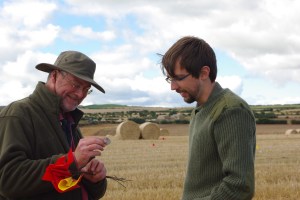
Microburin Goldsborough flint findenjoying lithic finds during 2012 fieldwork at Goldsborough near Whitby on the north-east coast of Yorkshire.

Could this be the site of another Howick or more?

Discover more | Past Horizons article 17-Dec-2012 » | UK Mesolithic Sites and Finds

PastHorizons homepage »

Name three things you find in the Whitby Gazette | Mesolithic?

Sea-faring news | Adventure archaeology | The best fish & chips in the world

Image_Goldsborough_FieldwalkingDear microburins,

I’m teasing slightly, but glad to see archaeology in local news in North Yorkshire—and a new scoop-it mesolithic news item from the Whitby Gazette.

The North-East Yorkshire Mesolithic Project is completing its current funded phase in 2013 by looking at a ‘coastal’ site near Whitby where flints recovered from volunteer and professionally led field walking suggest activity from the Mesolithic through the Neolithic and Bronze Age. Nearby locations complete the story through to the Roman period (farms, villas and signal stations), IMGP1251Anglo-Saxons (royalty) right up to the present. It’s also a stunning location today, right above cliffs (near Runswick Bay) with views southwards towards Whitby, north over some of the highest sea cliffs in England, eastwards toward Denmark and The Netherlands over the dark North Sea (there since only around 6500 BC).

I’m chuffed I made it into the volunteer field-walking pic (I’m the one in the middle) and may be able to eat Whitby fish & chips off myself? More seriously, the Mesolithic in NE England is compelling—a nexus of chronological, social and territorial themes—and back to the end of the last glaciation (Late Devensian) over 13,000 years ago.
Read more | Summer 2012 adventures

Spence

UK Mesolithic Sites and Finds | New page added

Go to the UK Mesolithic Sites and Finds pageA selective list of recent projects, excavations and discoveries. Includes websites where available and media coverage—look out for the “biggest, tallest, deepest, oldest” headlines.

Regional research frameworks, also included, provide a useful review of current knowledge across periods and heritage themes, archaeological assets, historical contexts, gaps in knowledge, research priority recommendations and extensive bibliographies.

Feel free to contribute more! | Go to the UK Mesolithic Sites & Finds page →

 Spence

In bed with Ray Mears | Wild food and limpets | Creswell cavemen

In bed with Ray Mears

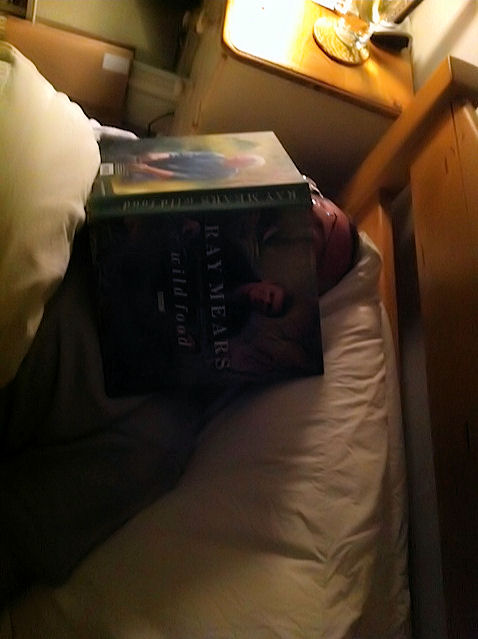
In bed with Ray Mears | Sound asleep : bruised nose : squashed glasses

Oh deary me. One minute I’m looking for salad to accompany a McLimpet® burger with hazelnut relish, the next I’m trapped by the sheer weight of learning.

It’s an enjoyable read, half price at Creswell Crags visitor centre—where I saw the incredibly beautiful 13,000 year old swimming deer on loan from the British Museum—but would have benefited from a little more proof-reading (the book I mean).

PS. If you haven’t been to Creswell in Derbyshire, it is well worth an afternoon. It’s off the M1 motorway near Chesterfield and Bolsover. It’s great for caveman-loving kids too (spot the hyenas, hippos and rather vicious looking bear), with visual technology that lets you explore Britain’s oldest cave art.

Spence Zzzzz

Hartlepool Sandman | Kids discover skeleton in dunes

Crimdon Dene Creative Commons 2.0

Crimdon Dene beck towards the sea | Creative Commons 2.0 License

School kids have come across human skeletal remains revealed by coastal erosion at Crimdon Dene near Hartlepool, north-east England. As a crouched burial, assuming it is a burial, could it be prehistoric? Bronze Age? Or even older? Evidence for Mesolithic burial in the UK, for example, is virtually non-existent outside Somerset and the odd finger in Scottish shell middens, unlike Denmark and Scandinavia.

Challenges and Possibilities | Dreams in Dunes

There are some challenges too. How do you investigate such a find in a highly unstable environment like sand dunes? I’m sure there’s more news to follow from Tees Archaeology. Crimdon Dene¹ is also known for extensive Mesolithic flint scatters discovered in the 1940s. Filpoke Beacon², 1.25km north, produced one of the earliest Late Mesolithic radiocarbon dates for geometric narrow blade microliths: 8760 +/- 140 BP³ (Q-1474) based on carbonized hazelnut shells. A submerged forest sits off the coast south of Hartlepool and has revealed Late Mesolithic and Neolithic evidence including flints and a possible fish weir (see Tees Archaeology’s monograph).

Bronze Age burials, albeit in stone cists, were discovered in the vicinity of the Mesolithic house at Howick, Northumberland Coast. I know where my money’s going—but dreams at least are free!

¹ Young, R. 2007. ‘I must go down to the sea again…’ A Review of Early Research on the ‘Coastal’ Mesolithic of North-East England, in Waddington, C. & Pedersen, K (eds). Mesolithic Studies in the North Sea Basin and Beyond. Oxford: Oxbow.
² Jacobi, R. 1976. Britain Inside and Outside Mesolithic Europe. Proc Preh Soc 42: 67-84.
³ Before Present (1950), hazelnut shells are more reliable for aging than timber because they are shorter lived—”old wood” can itself be hundreds of years old before burning.

Spence