Bradford Kaims Neolithic-Mesolithic wetland | Great new video from Bamburgh Research Project

Bradford Kaims is the latest venture of Bamburgh Research Project, working with the local community, volunteers and Universities to investigate a truly remarkable preserved ancient wetland site, located a few miles from Bamburgh, near the village of Lucker in Northumberland. The work has been supported by grants from the Heritage Lottery Fund and English Heritage.
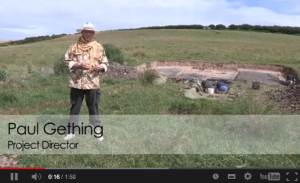
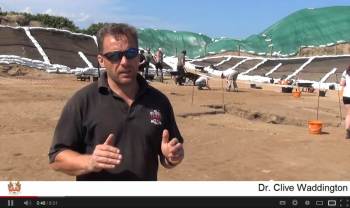
BRP-BK-VideoThis latest short video, one of three, gives an idea of the great potential of the site but also the risks from water table fluctuations and drying—as always adding a sense of urgency to recovery before it’s too late.

“We were very fortunate to have Dr Richard Tipping, an expert in environmental sciences, out with a group of staff and volunteers. His knowledge is extensive and his enthusiasm was definitely infectious. There is something almost magical about preservation properties of peat and the ability of a real expert to read a core sample in the manner of an open book of environmental history.”

The extensive wetland that formed here in the Late Glacial period was a large lake system throughout the Holocene. Pollen and palaeo-environmental evidence recovered from deep auger cores spans the last 12,000 years. Many sites of archaeological interest are known in this area, from Mesolithic and Neolithic scatters, to Bronze Age cairns and votive deposits, Iron Age hillforts and Medieval villages.

Spence | Twitter @microburin

Final day at Low Hauxley | Rescued from the Mesolithic sea

Gallery

This gallery contains 14 photos.

Dear microburins, I thought you might like to see the final pictures from Low Hauxley, Northumberland. The dig was a blast—an incredible, amusing and dedicated crew of volunteers, countless visitors and a community interest that reverberated around the Warkworth, Amble … Continue reading

Rescued from the sea | Excavations at Low Hauxley | Island of the dead? (video)

Updated 15-Aug with tsunami article

Click to watchAn ongoing rescue project is taking place in Northumberland where coastal erosion has revealed a Bronze Age “cemetery” burial cairn and evidence back to the Mesolithic. There are flints for sure but also antler and hundreds of preserved footprints in the peat beneath the present beach dated to over 7,000 years ago—adults, children and animals.

More media coverage is promised over the coming weeks, but here’s a great 8 minute video hosted by the inimitable Clive Waddington of Archaeological Research Services Ltd. This is a huge community project with more than 150 local volunteers and over 300 school children involved, supported by the Heritage Lottery Fund, Northumberland Wildlife Trust, Newcastle University, UK Coal and The Leader Project. Clive is well-known for the excavations of a Mesolithic house at Howick, Northumberland—one of the earliest Late Mesolithic structures in Britain, occupied from about 7800 cal BC, repaired and rebuilt over many generations. Will they find similar at Low Hauxley?

Recommended Reading

  • Barton, R.N.E. & Roberts, A. 2004. The Mesolithic period in England: current perspectives and new research, in Saville (2004, 339-58).
  • Passmore, D.G. & Waddington, C. 2012. Archaeology and Environment in Northumberland: Till Tweed Studies, vol. 2 of 2. Oxford: Oxbow.
  • Saville, A. (ed.) 2004. Mesolithic Scotland and its Neighbours. Edinburgh: Soc Antiquaries Scotland.
  • Waddington, C. (ed.) 2007. Mesolithic Studies in the North Sea Basin, a Case Study from Howick, North-East England. Oxford: Oxbow.
  • Waddington, C. & Pedersen, K. (eds) 2007. Mesolithic Studies in the North Sea Basin and Beyond. Proceedings of a Conference held at Newcastle in 2003. Oxford: Oxbow.

Spence

Friday Fish | Late Mesolithic fish trap at Dublin quays site

OLYMPUS DIGITAL CAMERAMicroburin’s Mesolithic Sites & Finds page has been updated with:

Dublin, Republic of Ireland | Late Mesolithic fish trap (6,500 years old) discovered at Victoria Quay.

“The wicker trap was discovered at the deepest point of the excavation near an attenuation tank and appears to be extremely well preserved. Up until now, only post-medieval material had been discovered on the site.”

Spence

Image | Mesolithic fish trap, Nationalmuseet Danmark (Microburin)

Decorated timber totem from Wales | Late Mesolithic-Early Neolithic | Windfarm find

MaerdyMicroburin’s UK Mesolithic Sites & Finds page has been updated with:

Maerdy Wind Farm, Rhondda Valley, Wales | 6,270 year old decorated timber “marker”, late Mesolithic or early Neolithic.

“The timber, which measures around 1.7m long, has an intricate pattern along one side and an oval motif at one end. It is believed to have been used as a tribal marker post indicating a tribal boundary, a hunting ground or a sacred site.”

The wood is now undergoing a conservation program of wax-glycol treatment at York Archaeological Trust labs where it is expected to stay until 2014.

Is it decorated timber, or natural (and insect) processes at work? Some skeptics are asking. Quote: “unless Maisie Taylor has blessed it….” | Keep watching!

Spence

Mesolithic Calendar in Scotland? | UK Sites and Finds update

Microburin’s UK Mesolithic Sites & Finds page has been updated with:

Scotland | Crathes Castle, Aberdeenshire | Excavations by Birmingham University at Warren Field (crop marks) found a series of 12 pits which appear to mimic the phases of the moon and track lunar months. Lots of media coverage! What do you make of it?

Review the BBC News article and access an academic article in Internet Archaeology (IA paywall fee of £7.50 for the article, BBC free) →

And a good video by Vince Gaffney today (15-Jul, free) »

Spence