Mesolithic Calendar in Scotland? | UK Sites and Finds update

Microburin’s UK Mesolithic Sites & Finds page has been updated with:

Scotland | Crathes Castle, Aberdeenshire | Excavations by Birmingham University at Warren Field (crop marks) found a series of 12 pits which appear to mimic the phases of the moon and track lunar months. Lots of media coverage! What do you make of it?

Review the BBC News article and access an academic article in Internet Archaeology (IA paywall fee of £7.50 for the article, BBC free) →

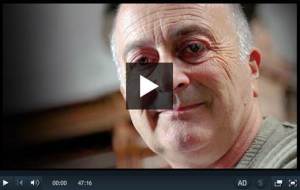
And a good video by Vince Gaffney today (15-Jul, free) »

Spence

Open Exclusion | The Personal Open Access Experience

Updated | 6-Jun-2013 to add LSE blog link
Updated | 7-Jun-2013 to add “blogs as scholarly publication” link

The issue of open access is a boiling pot of frustration (cost) and anxiety (ethics and legality).

open-accessFor independent researchers, like myself, whether previously in academia and/or aspiring to be enrolled, or for community practitioners (I loath the term “amateur archaeologist“) or for members of the public where even access to public libraries is becoming an increasing luxury (if that library has access at all to academic journals, print or online)—open access is a friction point.

While governments, UK and Federal US included, are grappling with and legislating for open access to learned materials, funded by or as a part of publicly financed research, the incumbent publishing monopolies are lobbying to parry such initiatives based on “sustainable cost” doctrines, and their financial interests therein.

Personal Experience

I can certainly vouch for the pain, being outside academia right now, that pay-wall “open access” causes. I subscribe to the few e-publishers and academic societies that I can afford—a gradually diminishing number since I don’t presently have a regular income stream. I am grateful, as a university alumnus, in having access to JSTOR, although in archaeology the titles which are freely accessible are far from comprehensive, especially for fields like Mesolithic archaeology—a discipline that also spans many specialisations in science and social science, the humanities, cultural heritage management (CRM) and derivative disciplines. I am even more grateful for the “green” and (very rare) “gold” open access vehicles that allow me either time-delayed or immediate access to scholarly material.

Implications

One thing is certain: I will likely be several steps behind those lucky enough to be within formal education or post-doc (yet paying excruciating tuition fees for the pleasure). Open exclusion is part of the reason. That feels neither fair nor productive—the public are an equal and obligatory participant, a partner in our shared heritage, moreso in the evolution and management of our shared environment, the collective owners of our cultural assets? The public are not a simple “consumer bucket” happy to receive amorphous outputs or media sound-bites. Exclusivity and access-by-means are surely forms of cynical discrimination unworthy of our societies, not least those that espouse a lifetime education and education-for-all ethos? Aren’t these educational aspirations also being subjugated to a market-driven “economic return” mandate, naive in its focus on immediacy and therefore myopic in leveraging the true meaning of past, place, presence, well-being and footfall for healthier (and less welfare-costly, more inclusive, more sustainable, more attractive) communities?

Example

And yet, if I were to subscribe to the venerable Journal of Archaeological Science (publisher: Elsevier), by example, it would be beyond my budget (online access is a 5-user license). They are a respected and profuse publisher. If I were to pay-to-download every article they publish across monthly volumes in a given year, I would have to pay over $11,000 (obviously far more than the individual subscription, but it does illustrate my point around reasonable cost—many papers are only six or so pages). Something is amiss?

Returns

Any law of diminishing returns suggests a tipping-point between over-pricing in any given marketplace and realising income streams as a function of volume-based consumer viability—if not “popular” demand. I really don’t mind paying a few dollars/euros/pounds for a worthy, scholarly and life-changing article. I do, however, resent paying $31.50 per article or a mandate to cluster papers into discounted blocks that are still priced beyond my means.

Please read THESE blogs

These excellently written blogs go a long way to explaining both the terminology as well as the seemingly intractable issues that are not without tragedy. I highly recommend reading them. There are plenty more too.

» Sustainability at Any Price is not Sustainable: Open Access and Archaeology
By: Eric Kansa, UC Berkeley and OpenContext.org

» Academics and universities must continue to develop open access alternatives to break the monopoly of large publishers
By: Ann McKechin MP (LSE blog)

» Blogs as scholarly publication: “Taking a Chance: My Blog is a Publication”
By: Katy Meyers (2011) Bones Don’t Lie (blog), Michigan State University | The comments are also supportive and interesting

And now think about how YOU are and will be affected, how you will respond, what you will say, how you will canvass for a fairer outcome, what you will do.

Acknowledgements

Prof Julian D Richards (University of York) for posting it on Twitter today. York is also home of the Archaeological Data Service (ADS) who work continuously to digitise archaeological resources for the greater good. The authors of the ASOR blog need to be congratulated for a well-written and well-appraised status quo and portent for some difficult battles ahead.

Microburin

Sneak Peek | Star Carr Exhibition Yorkshire Museum | Mesolithic

Warning | If you don’t want to preview some of the exhibition, don’t click on the images.
Photographs by microburin with kind permission of the Yorkshire Museum (quality subject to lighting conditions and excitement).

4sevenTwitterIn an earlier post I wrote in anticipation of the After The Ice exhibition at the Yorkshire Museum, York, England. Open until May 2014, the exhibition presents some of the outstanding Early Mesolithic artefacts that haven’t been on display in Yorkshire since the redesign of the Rotunda Museum, Scarborough—which now focuses on the outstanding palaeontology (fossil) collections. Other Star Carr artefacts and ecofacts, dating to between 9300 and 8400 BC, appear in the Museum of Archaeology in Cambridge (University) and (occasionally) at the British Museum—much more remains in stores.

Appreciating that not all readers will be able to make it to York to see the exhibition, and yet not wanting to be a “spoiler” for those that will, here’s a sneak peek at some of the display. Everybody will have their own individual sense of expectation, their own views and take-aways having seen the exhibits and, hopefully, reading the accompanying booklet. It’s a bit tricky to find in the museum bookshop so you may have to ask.

Stone age Tsunami

4OD_TTS_TsuIn an unusual clustering of Mesolithic events, Channel 4 (UK) broadcast a long-awaited Time Team Special—Britain’s Stone Age Tsunami—hosted by the inimitable Tony Robinson and featuring the excavations at Star Carr (and Prof Nicky Milner in a deckchair) as well as looking at the 6100 BC tsunami evidence from the Scottish east coast and at sea level rise attested by the submerged forests in the Severn estuary (Wales). The programme, with excellent CGI graphics, is available to watch online on 4OD until 28 June (47min, UK & Rep of Ireland only) | Watch it now »

Acoustic Experience

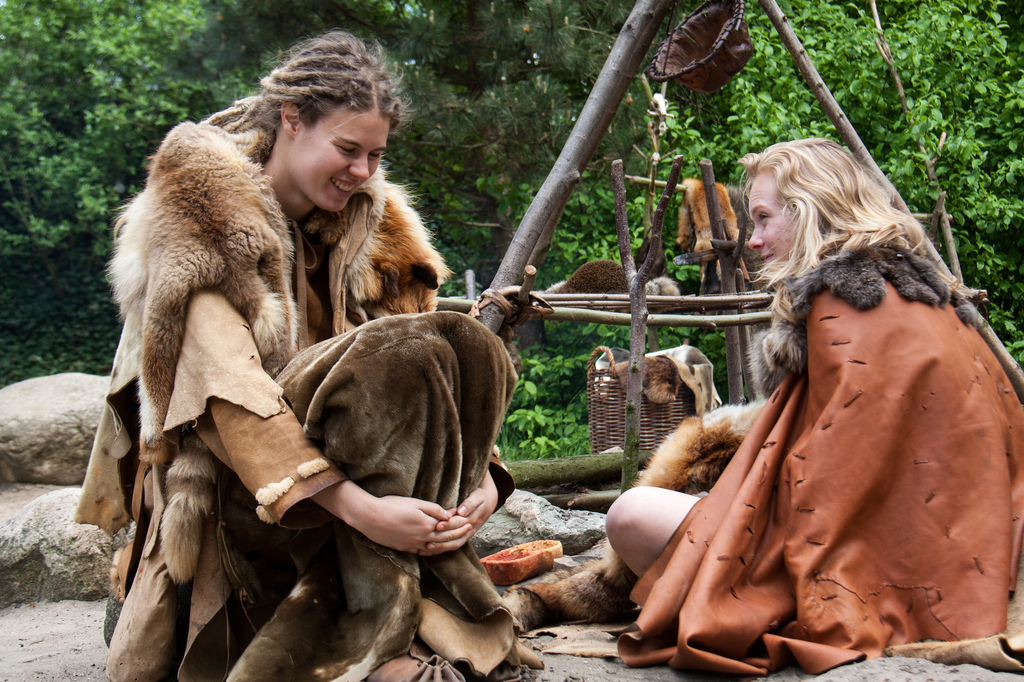
hanss_mesowomenI’m not sure whether it was a one-off or it will be a regular feature, but when I showed up on a misty (we call it fret—fine mizzle), damp weekday the team were experimenting with an acoustic installation on the lawns in front of the museum. Thanks to archaeologist Ben Elliot and sound artist Jon Hughes for explaining it. Standing at the centre of a 30m circle of high-definition speakers one could experience “sounds of the mesolithic”. It was extraordinary: flint knapping, wild fowl, a wild boar being hunted (not dissimilar to a January Sales rush) and more. We chatted about the absence of human voices, but the team are thinking about how best this might be incorporated. For example, what language would one use? Would a rhythmic “dance” or distant “babble” inject the people into the wildscape? I do hope they try something—this really adds a special dimension to the museum’s offering in a similar way to the Scandinavian banter at the Jorvik Viking museum.

Image credit (above): hans s | Foter | CC-BY-ND

Preview Images

Click on images to enlarge | opens new window

OLYMPUS DIGITAL CAMERA OLYMPUS DIGITAL CAMERA OLYMPUS DIGITAL CAMERA

Image Key

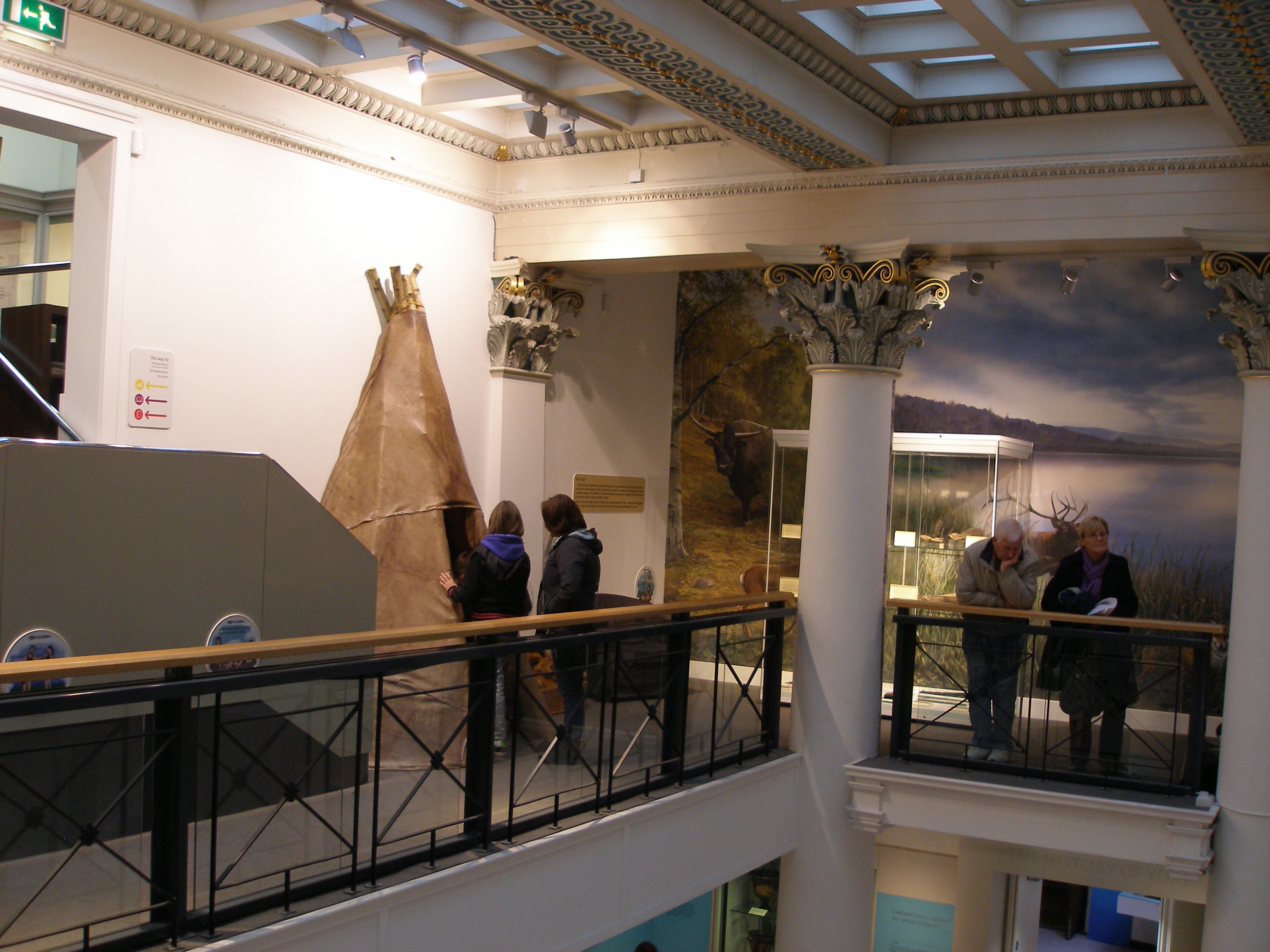
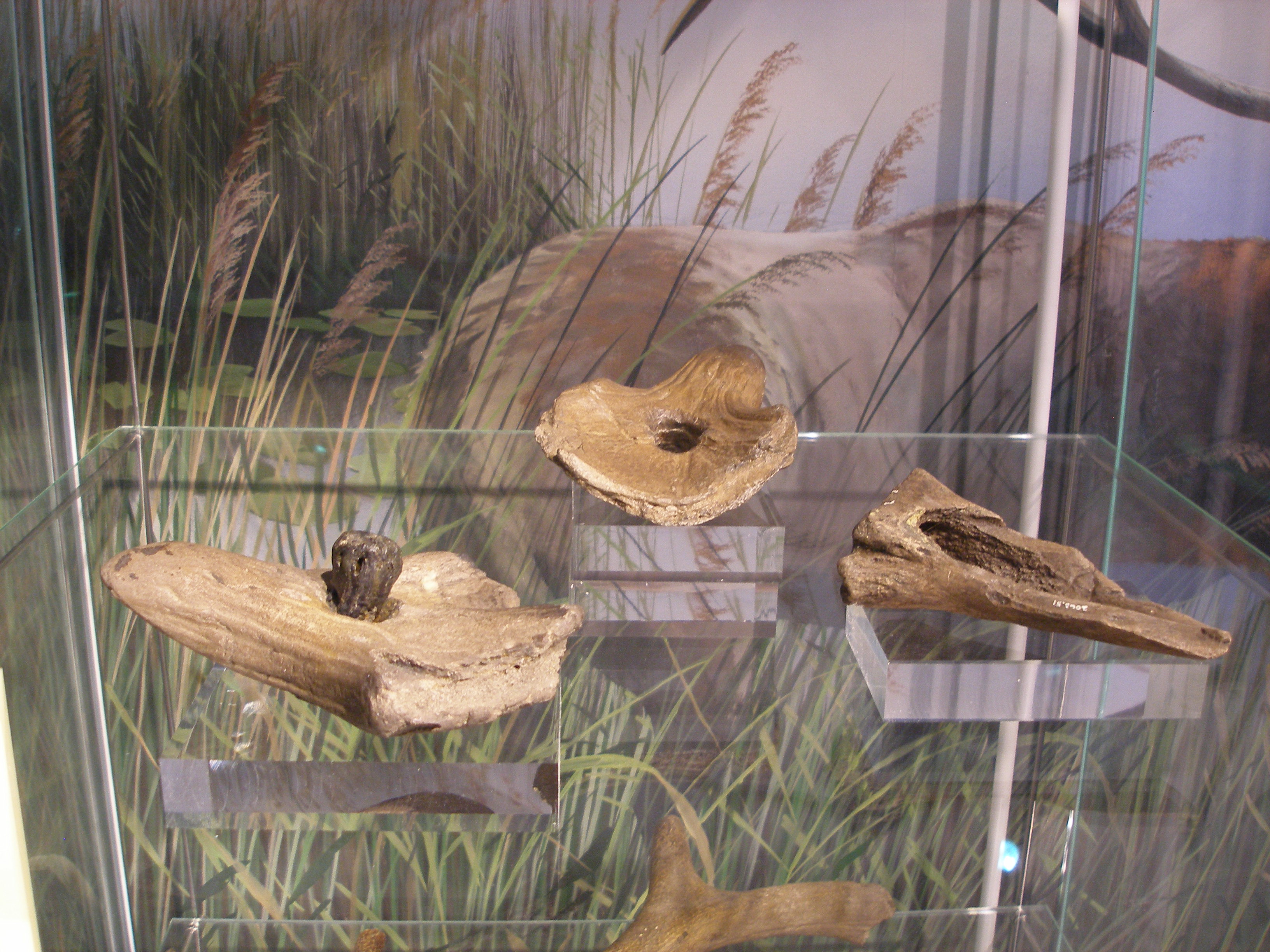
  • Top | L: kids loved the semi-tepee though I didn’t see anybody wearing the furry capes, but I did see some children outside with fantastic home-made card antler frontlets; C: red deer antlers showing groove & splinter technique where thin strips of antler were removed with flint burins, and some barbed points; R: various bone macro-tools, some hafted.
  • Middle | L: aurochs skull (massive wild ox, three times the size of a modern cow); C: barbed points (there are 191 in total) and flint tools, top right are flint nodules (beach pebbles) and a stone fabricator/hammer although most flint was worked with antler soft hammers; R: fire-heated stones used to boil water and slow-cook, with examples of fungus at the bottom, slow-burning/glowing, portable fire-starters.
  • Bottom | L: one of the 21 red deer stag antler “frontlets”; C: an amber “thingy” on the left derived from Baltic deposits and sometimes washed up on the Yorkshire coast, and some “red ochre” (iron oxide) used as a pigment; R: shale beads perforated using flints, and two bird bone beads top right.

Microburin

Digging Seamer Carr 1985-6 | A few Mesolithic Memories of VP85

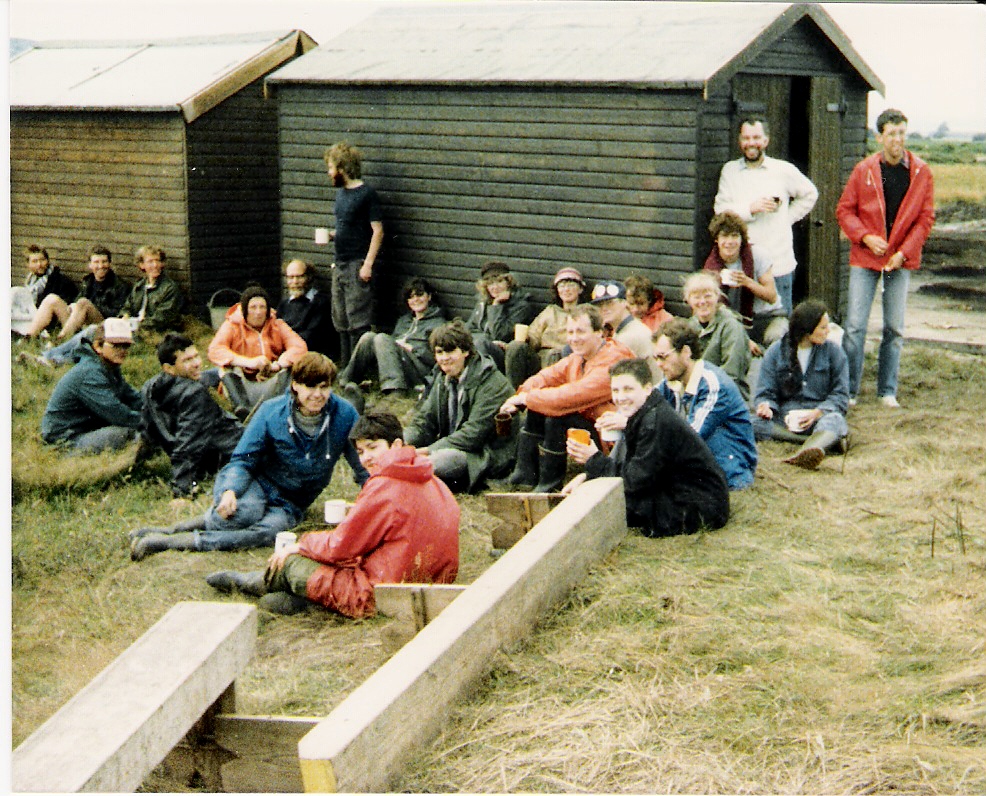
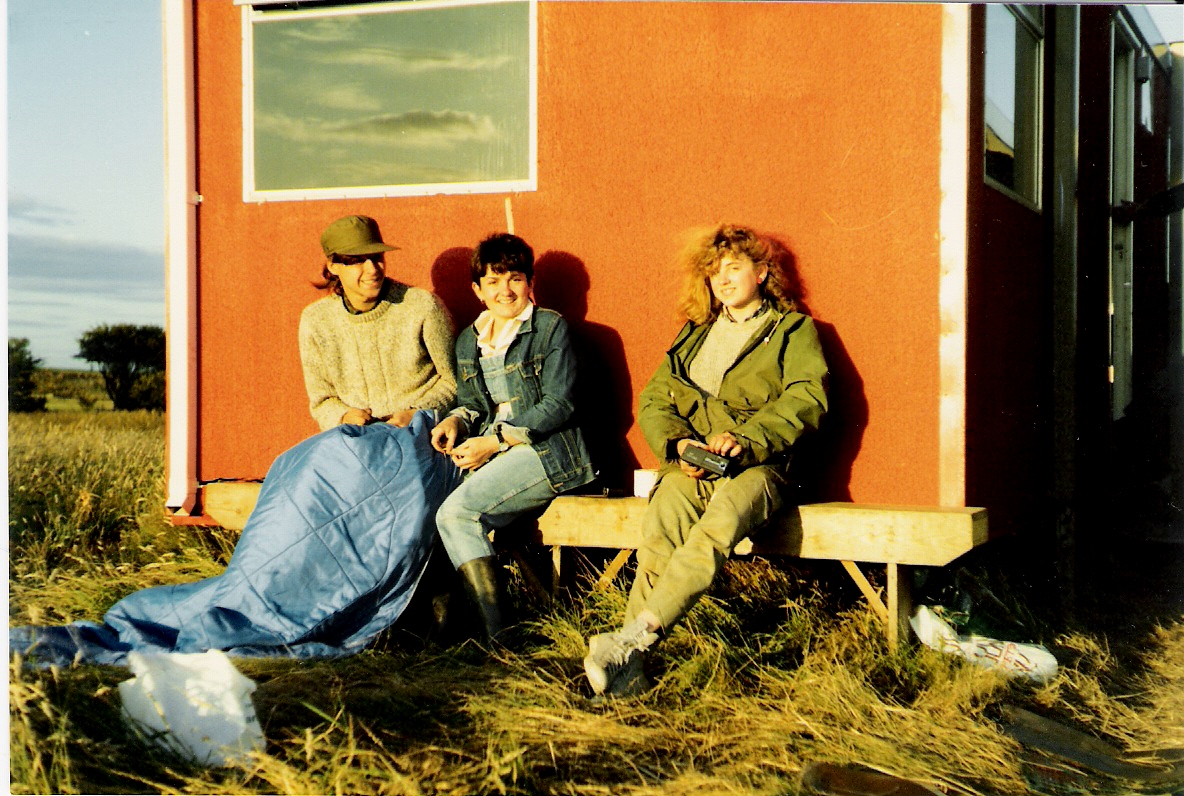
Seamer Carr 1985I came across these old pictures, showing their age a bit (and mine), from the excavations at Seamer Carr, not far from Star Carr in the Vale of Pickering, North Yorkshire.

Located in the path of a whiffy landfill (or more accurately “floating on peat”) site, the open area excavation was part of a bigger environmental project to reveal the extent of post-glacial Lake Pickering (more properly Lake Flixton), on which Star Carr is but one of now many Early and Late Mesolithic activity areas. I like the later stuff most, and at least one microlith array is known (i.e. an arrowhead configuration).

scan0010I was a volunteer under-grad at Durham (1984-7) and when not digging on the North York Moors, East Yorkshire or Poland, recording Anglo-Saxon churches in Tynedale or cataloguing Roman Samian Ware in the Old Fulling Museum attic, I squelched at Seamer Carr and in a few 1x1s at Star Carr.

It rained every day except one. It was one of the coldest summers on record. A force 9 gale laid every tent to waste despite 4 foot stakes—I slept in dad’s car in year 2 and learnt a thing or two about shift gears. We shan’t talk about the Elsan loos, nor about blue not being my favourite colour anymore.

scan0011   scan0009

However, we all delighted in warm team spirit, hot tea, weekly showers, Helen Patterson’s wonderful cuisine, Schadla-Hall dry wit, Ed Cloutman’s auger, fine Yorkshire beer, and laughs at the expense of the last person to be submerged to the waist, or higher, in the sump pit—”soak away” would not be accurate. The lithics were fine (very few on the spoil heap), dead horses emerged (well, one) and a bit of antler at “the other place”. Great memories, dried out, like the peat.

Microburin

After the Ice | Major Star Carr exhibition opens at Yorkshire Museum | Mesolithic

Updated 24 May 2013

Star Carr new excavations 2010Coinciding with the publication of a new popular book, the Yorkshire Museum is hosting a major exhibition of artefacts and interpretations of the UK’s most famous and finds-rich Mesolithic landscape at Star Carr in Yorkshire, England. The exhibition is open from 24 May 2013 for a year and is widely covered in the archaeological and regional media.

Bringing together the artefacts previously scattered across many museums and repositories since Clark’s excavations in the 1950s, the exhibition aims to present the most recent investigations in context—the landscape, the re-colonisation of Britain (or expansion of the late Glacial “epi-Palaeolithic” long-blade communities such as those at Creswell Crags in Derbyshire), the environmental transformations, human beliefs, behaviours, mobility and the material culture that give hints to a complex hunter-gatherer-fisher society. These were modern humans, just like us.

On Thu 30 May 8pm there will also be a UK television Time Team special on Star Carr (Channel 4).

Acid Attack

IMG_4349Current archaeological research and interventions in the eastern Vale of Pickering, recently under the leadership of York and Manchester Universities, acknowledge the very short remaining lifespan of previously waterlogged organic remains. What were hard, crisp and tangible testaments to Mesolithic lifestyles—barbed points, supposed “head-dresses”, the working of antler, bone and wood, shale beads, birch rolls and more—are now feeble ghosts of their former selves, if they survive at all in the peat. Drainage and agricultural activities have desiccated and acidified the waterlogged matrix: it often has the pH of stomach acid today.

Image | Star Carr excavations 2010 (Microburin)

Where did they go?

StarCarrReconOn the other hand, fieldwork since the 1980s and more recently has proven that Star Carr and the Early Mesolithic lakeside activity areas were far more extensive than previously thought, at around 9000 cal BC. Hoof prints from undomesticated horses have been discovered on Flixton Island—perhaps their last stand? Mobility across a forested, watery landscape becomes apparent by looking at the lithic (flint) distribution and operational chains, from sourcing the raw material, knapping reduction strategies, caching-curation, re-usage and discard behaviours. There’s also now evidence for structures* of some sort and repeated returns to the area over generations. Unlike corollaries in southern Scandinavia, linked by Doggerland across what is now the North Sea, only human burials remain entirely elusive at Star Carr—for now.

*Conneller, C. et al. 2012. Substantial settlement in the European Early Mesolithic: new research at Star Carr. ANTIQUITY 86 (334), 1004-1020.
Click to viewIf not left to the elements, perhaps the dead were deposited in the lake, or on islands now denuded, or far “offshore”? Watery places retained significance throughout the prehistoric period—were the many barbed points deposited rather than discarded? Do we even know what we are looking for? Within a few thousand years the North Sea inundation separated Britain from Europe, and a rather different material culture evolved—the so called Late Mesolithic. One can argue for evolution or revolution, but much more research and dating is needed from the post glacial into the Neolithic where communities with very different life-strategies may have co-existed (northern European evidence hints at this).

The exhibition is a once-in-a-generation chance to see the most comprehensive and intimate story about our earliest post-glacial ancestors. People just like us, and yet so different. Or perhaps not? How many of our “instinctive” behaviours today bear testament to our hunter-gatherer-fisher past? Maybe we just live longer and refined the BBQ experience? I promise a review when I have seen it.

Archives

Also coinciding with the exhibition, the Archaeology Data Service (ADS) in York have published the online Star Carr Archive, funded by English Heritage, “with the primary aims of locating and cataloguing as many of the finds and excavation records as possible in order to enable further research”.

“Moore’s paper archive is missing. There is no known paper archive from Clark’s excavations and it is thought that all records must have been destroyed once the monograph (Clark 1954) had been published.”

Inevitably over the last 60 years, and more so with the separation of many of the written records, artefacts and ecofacts, some materials have been lost or misplaced. This initiative identifies, records and consolidates what remains into a single report.

Recent Press Coverage

Image top | Courtesy University of York
Lithics Studies Society | Journal 33 2012 now out | Why not join?

Lithics33The latest journal, No. 33 for 2012 is just out, and sexy. Why not join the Lithic Studies Society?

Flint and stone tools have been manufactured and used since the earliest times and arguably they represent the world’s oldest technology. The Lithic Studies Society was founded in 1979 to advance the international study of lithic industries, and particularly flaked and ground artefacts, in the broadest possible context. Member’s interests are diverse, spanning Palaeolithic to historic periods across many areas of the world. The Society provides a convivial forum for the exchange of ideas and information.

The Society has over 350 members from four continents. Membership is growing steadily, and they are always delighted to welcome new members. The Society is open to all who have, or would like to develop, an interest in lithic artefacts of any period. Members receive:

The membership year runs from 1st October to 30th September and the journal Lithics is published annually. The AGM takes place in October and all members are welcome. Individual rates are £15.76 (including 76p PayPal levy).