Unknown's avatar

About Spencer Carter

Field Archaeologist and Lithics Specialist at TimeVista Archaeology Honorary Research Fellow in Department of Archaeology, Durham University Council Member of RESCUE The British Archaeological Trust Council for British Archaeology: Yorkshire Group Former Chair of Teesside Archaeological Society

Irish Mesolithic Cemetery | Hermitage, Co. Limerick

funeral-pyre◊ Dear Microburins,

This is to highlight an excellent short article about Mesolithic period cremation burials at Hermitage on the River Shannon. The article is on the Irish Archaeology website/blog and was published in March 2013.

“The three cremations at Hermitage are extremely significant and represent an important addition to the very small corpus of Mesolithic burials from Ireland. Not alone are they the oldest burials from the country but they also demonstrate that our earliest hunter-gather ancestors practiced a relatively sophisticated means of disposing of their dead.”

Spence

Schools Prehistory | Museums displaying prehistoric artefacts

◊ Dear Microburins,

My friend Kim Biddulph at Schools Prehistory is compiling a list of museums whose displays (and resources for children) include items from the Stone Age to Iron Age. I’ve sent details of some North Yorkshire and North-east museums not currently on the list:

  • Ryedale_IAhut2Palace Green Library, Durham City
    A new gallery tells the 10,000 year story of Durham from the ice age to modern times.
  • Museum of Hartlepool, Jackson Dock, Hartlepool
  • Ryedale Folk Museum, Hutton le Hole, North Yorkshire
    Displays Include antiquarian flints and stone axes, extra-ordinary finds from the “Windy Pits” and a waterlogged Iron Age Settlement. There’s a fantastic reconstructed Iron Age round house and some rare breed livestock.
  • Sunderland Museum and Winter Gardens, Borough Road, Sunderland
  • Swaledale Museum, Reeth, North Yorkshire OLYMPUS DIGITAL CAMERA
    This small yet fascinating museum includes stone age flint and chert tools dating back to the Mesolithic and Neolithic periods (Tim Laurie collection).
  • Wensleydale, Dales Countryside Museum, Hawes, North Yorkshire
    Includes flint tools that likely date back to the late Glacial Upper Palaeolithic (13,000 years ago) discovered in Wensleydale (Tim Laurie collection).
  • Whitby Museum and Art Gallery, Pannet Park, Whitby, North Yorkshire Fylingdales
    The museum is an amazing place to visit and still retains its eclectic Victorian “collectors” atmosphere. There are stone age flint tools as well as Bronze Age pottery and bronze artefacts. A replica of the decorated Neolithic stone discovered after fires on Fylingdales Moor sits alongside finds excavated in the early 20th century at Roman signal towers along the Yorkshire coast.

Neolithic stone from Fylingdales Moor | Credit: Graham Lee, North York Moors National Park Authority.

If you have other suggestions (and you can include images with permissions), please contact Kim and the team using the form on this web page »

About Schools Prehistory

Schools Prehistory was set up in 2013 by a group of archaeologists and educators to help teachers and heritage educators get ready for the prehistory element of the new primary history curriculum at Key Stage 2 in England. They are available for consultancy, to run training or workshops in schools and museums. They also sell information booklets designed for the non-specialist on their website—more lesson plans and supporting resources will be coming soon. They are also developing good quality replica object-handling boxes for sale. Keep up to date with what’s happening on their blog »

  • Read about the introduction of prehistory into the English national curriculum in Kim’s article published in the Teesside Archaeological Society BULLETIN 19 (2014–15, pp 37–41) » PDF extract

Spence

Feel the heat | It’s a cremated Mesolithic colleague

◊ Dear Microburins,

OA_Some_cremated_remains_by_typeExciting news reported on social media today. Despite a few questionable media-focused soundbites, Oxford Archaeology have reported something important. Expected to be Bronze Age, cremated (or at least burnt) human bones – a proportion of an entire body – have been AMS-dated to around 5600 cal BC on a developer-led commercial excavation at Langford, Essex. With so few related finds in the UK and Ireland, and even our Doggerland neighbours on the other side of the North Sea basin, generalisations are still as risky, as are any specific conclusions drawn. However, whether or not we are looking in the right places for the deceased, this adds to the record in a valuable way. I suspect the true value will still take us Mesolithic archaeologists many generations to fathom, but good work!

Spence

Image courtesy of © Oxford Archaeology.

Charting Chipeling | Kiplin Hall archaeology exhibition opens 3 April

◊ Dear Microburins,

I’m pleased to announce here that an archaeology exhibition opens on Good Friday at Kiplin Hall near Catterick, North Yorkshire and runs until 28 October.

One-thousand-and-one finds will be on display tracking the prehistory and history of the hall and its estate from the Mesolithic to WWII. This was a fantastic community dig to be involved in last year, truly cross-community, generations and backgrounds, including students from Maryland University. Hopefully there’ll be some great pictures from the inaugural open evening event just before the public launch (my esteemed professor will be there, so I’ll need to prep!).

The monograph on the 2014 excavations is due later this year with Jim Brightman, Solstice Heritage, pulling together the specialist reports, including the prehistoric flint and chert lithics by you know who. My favourite find, however, remains the racing pigeon leg-ring with serial number from the 1960s found in proximity to gun cartridges.
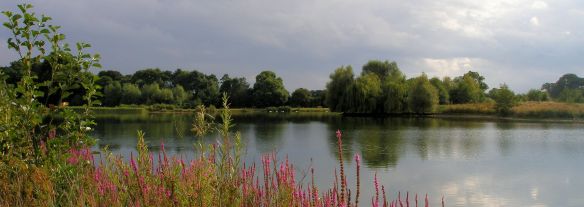
Originally one of Easby Abbey’s monastic granges, Kiplin Hall is a gem of a stately home, trust and volunteer-run, with fantastic grounds, a huge lake, walled garden—you can often buy the lush produce—and plenty to see in a tranquil setting a few miles from the A1 near Brompton-on-Swale and Scorton. A watching-brief excavation in January this year, in a pipe trench, also seems to have revealed evidence for the pre-Jacobean manor’s demolition deposits.

Spence

Swifterbant Stones | Two whopping volumes and a lithic analysis framework

◊ Dear Microburins,

SwifterbantIt’s big, it’s two whopping volumes, it’s got a full lithic typology and analysis protocol (vol 1 appendix) — we’re liking that already.

Swifterbant Stones: The Neolithic Stone and Flint Industry at Swifterbant (The Netherlands) by Izabel Devriendt (Groningen 2014).

“In this research the stone and flint artefacts of the site Swifterbant are analysed. Attention is focussed on the Neolithic occupation phase of the prehistoric creek system (c. 4300 – 4000 cal BC) where archaeological traces were found on several levee and river dune sites. This study shows that there is a larger variability in site types than originally presumed. It is established that these sites are all part of one settlement system in which they all had a different function. This thesis comprises a monograph on the research history of the site and the different aspects of the lithic research such as typological analysis, technological attribute analysis, raw material analysis and use-wear analysis, in combination with a detailed inventory (catalogue). All this leads to new insights into the use of lithic artefacts. The importance of stone tool morphology, the selective gathering of stone tool blanks or the use of two different fl­int production sequences are but a few of these interesting aspects. Other topics concern tool function, mobility, raw material access and use, cultural markers and social identity. In combining the results from this research with that of other Swifterbant sites a better understanding of the different aspects of prehistoric stone and fl­int industries is gained.”

Oxbow Books > Swifterbant Stones

Spence

Island Mesolithic | Late Mesolithic microliths from Isles of Scilly

◊ Dear Microburins,

TAS_Bulletin_19_2014_CvrWhile my head is down in editorial work – Teesside Archaeological Society’s annual Bulletin journal with 70 pages of regional wonder and CBA Yorkshire’s FORUM YORKSHIRE archaeological journal volume 3, my last as editor – I came across the AHRC-funded project “Neolithic Stepping Stones”, June 2011 to September 2014.
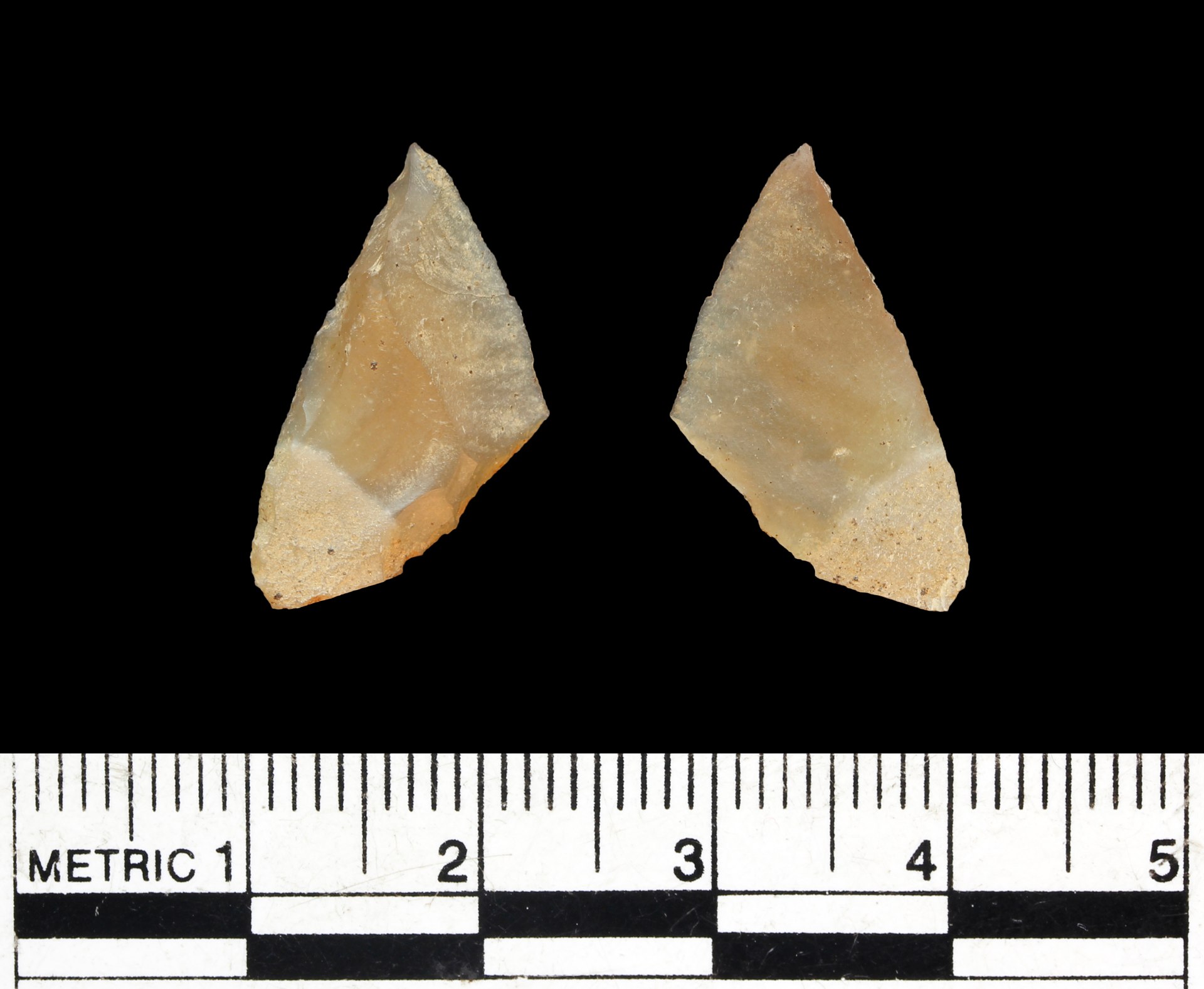
This builds on recent discoveries and more prospecting along the western coast of the British Isles and includes Late Mesolithic microliths recently discovered on the Isles of Scilly:


Isles of Scilly | Neolithic Stepping Stones Project (University of Reading, AHRC)
Stepping stones to the Neolithic: Islands, maritime connectivity and the ‘western seaways’ of Britain, 5000-3500 BC’ looked to five island groups and the surrounding seas for answers. These were the Channel Islands, Isles of Scilly, Isle of Man, Outer Hebrides and Orkney. “Another exciting find came from the Isles of Scilly dig, which unearthed a stash of around 50 microliths, tiny flint tools from the Mesolithic (pre-Neolithic) era. Rather than being of British design, these are in Belgian and northern French style. “That was very unexpected,” says Garrow. “It tells us that people were sailing between northern France, Belgium and the Isles of Scilly around 6000 BC. It’s a very good sign of pre-Neolithic maritime contact.”

Another outcome of the project is a book co-authored by Dr Garrow, Dr Sturt and post-doctoral researcher Dr Hugo Anderson-Whymark. ‘Continental connections: exploring cross-channel relationships from the Mesolithic to the Iron Age’ (Oxbow) will be published by March 2015.

Scilly_microlith

One of the 57 Mesolithic microliths found at Old Quay in 2013 (photo: Hugo Anderson-Whymark).

The team have also produced a series of web resources drawing on the research, including a western seaways navigation game that works within Google Earth. And they used social media throughout the project – having such geographically dispersed participants made Twitter the perfect way to transmit updates.

Microburin’s Sites and Finds page has also been updated.

Spence