Rescued from the sea | Excavations at Low Hauxley | Island of the dead? (video)

Updated 15-Aug with tsunami article
Click to watchAn ongoing rescue project is taking place in Northumberland where coastal erosion has revealed a Bronze Age “cemetery” burial cairn and evidence back to the Mesolithic. There are flints for sure but also antler and hundreds of preserved footprints in the peat beneath the present beach dated to over 7,000 years ago—adults, children and animals.

More media coverage is promised over the coming weeks, but here’s a great 8 minute video hosted by the inimitable Clive Waddington of Archaeological Research Services Ltd. This is a huge community project with more than 150 local volunteers and over 300 school children involved, supported by the Heritage Lottery Fund, Northumberland Wildlife Trust, Newcastle University, UK Coal and The Leader Project. Clive is well-known for the excavations of a Mesolithic house at Howick, Northumberland—one of the earliest Late Mesolithic structures in Britain, occupied from about 7800 cal BC, repaired and rebuilt over many generations. Will they find similar at Low Hauxley?

Recommended Reading

  • Barton, R.N.E. & Roberts, A. 2004. The Mesolithic period in England: current perspectives and new research, in Saville (2004, 339-58).
  • Passmore, D.G. & Waddington, C. 2012. Archaeology and Environment in Northumberland: Till Tweed Studies, vol. 2 of 2. Oxford: Oxbow.
  • Saville, A. (ed.) 2004. Mesolithic Scotland and its Neighbours. Edinburgh: Soc Antiquaries Scotland.
  • Waddington, C. (ed.) 2007. Mesolithic Studies in the North Sea Basin, a Case Study from Howick, North-East England. Oxford: Oxbow.
  • Waddington, C. & Pedersen, K. (eds) 2007. Mesolithic Studies in the North Sea Basin and Beyond. Proceedings of a Conference held at Newcastle in 2003. Oxford: Oxbow.

Spence

Friday Fish | Late Mesolithic fish trap at Dublin quays site

OLYMPUS DIGITAL CAMERAMicroburin’s Mesolithic Sites & Finds page has been updated with:

Dublin, Republic of Ireland | Late Mesolithic fish trap (6,500 years old) discovered at Victoria Quay.

“The wicker trap was discovered at the deepest point of the excavation near an attenuation tank and appears to be extremely well preserved. Up until now, only post-medieval material had been discovered on the site.”

Spence

Image | Mesolithic fish trap, Nationalmuseet Danmark (Microburin)

Decorated timber totem from Wales | Late Mesolithic-Early Neolithic | Windfarm find

MaerdyMicroburin’s UK Mesolithic Sites & Finds page has been updated with:

Maerdy Wind Farm, Rhondda Valley, Wales | 6,270 year old decorated timber “marker”, late Mesolithic or early Neolithic.

“The timber, which measures around 1.7m long, has an intricate pattern along one side and an oval motif at one end. It is believed to have been used as a tribal marker post indicating a tribal boundary, a hunting ground or a sacred site.”

The wood is now undergoing a conservation program of wax-glycol treatment at York Archaeological Trust labs where it is expected to stay until 2014.

Is it decorated timber, or natural (and insect) processes at work? Some skeptics are asking. Quote: “unless Maisie Taylor has blessed it….” | Keep watching!

Spence

Mesolithic Calendar in Scotland? | UK Sites and Finds update

Microburin’s UK Mesolithic Sites & Finds page has been updated with:

Scotland | Crathes Castle, Aberdeenshire | Excavations by Birmingham University at Warren Field (crop marks) found a series of 12 pits which appear to mimic the phases of the moon and track lunar months. Lots of media coverage! What do you make of it?

Review the BBC News article and access an academic article in Internet Archaeology (IA paywall fee of £7.50 for the article, BBC free) →

And a good video by Vince Gaffney today (15-Jul, free) »

Spence

Sneak Peek | Star Carr Exhibition Yorkshire Museum | Mesolithic

Warning | If you don’t want to preview some of the exhibition, don’t click on the images.
Photographs by microburin with kind permission of the Yorkshire Museum (quality subject to lighting conditions and excitement).

4sevenTwitterIn an earlier post I wrote in anticipation of the After The Ice exhibition at the Yorkshire Museum, York, England. Open until May 2014, the exhibition presents some of the outstanding Early Mesolithic artefacts that haven’t been on display in Yorkshire since the redesign of the Rotunda Museum, Scarborough—which now focuses on the outstanding palaeontology (fossil) collections. Other Star Carr artefacts and ecofacts, dating to between 9300 and 8400 BC, appear in the Museum of Archaeology in Cambridge (University) and (occasionally) at the British Museum—much more remains in stores.

Appreciating that not all readers will be able to make it to York to see the exhibition, and yet not wanting to be a “spoiler” for those that will, here’s a sneak peek at some of the display. Everybody will have their own individual sense of expectation, their own views and take-aways having seen the exhibits and, hopefully, reading the accompanying booklet. It’s a bit tricky to find in the museum bookshop so you may have to ask.

Stone age Tsunami

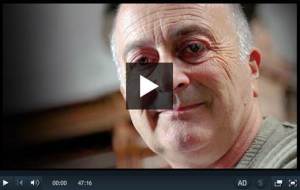
4OD_TTS_TsuIn an unusual clustering of Mesolithic events, Channel 4 (UK) broadcast a long-awaited Time Team Special—Britain’s Stone Age Tsunami—hosted by the inimitable Tony Robinson and featuring the excavations at Star Carr (and Prof Nicky Milner in a deckchair) as well as looking at the 6100 BC tsunami evidence from the Scottish east coast and at sea level rise attested by the submerged forests in the Severn estuary (Wales). The programme, with excellent CGI graphics, is available to watch online on 4OD until 28 June (47min, UK & Rep of Ireland only) | Watch it now »

Acoustic Experience

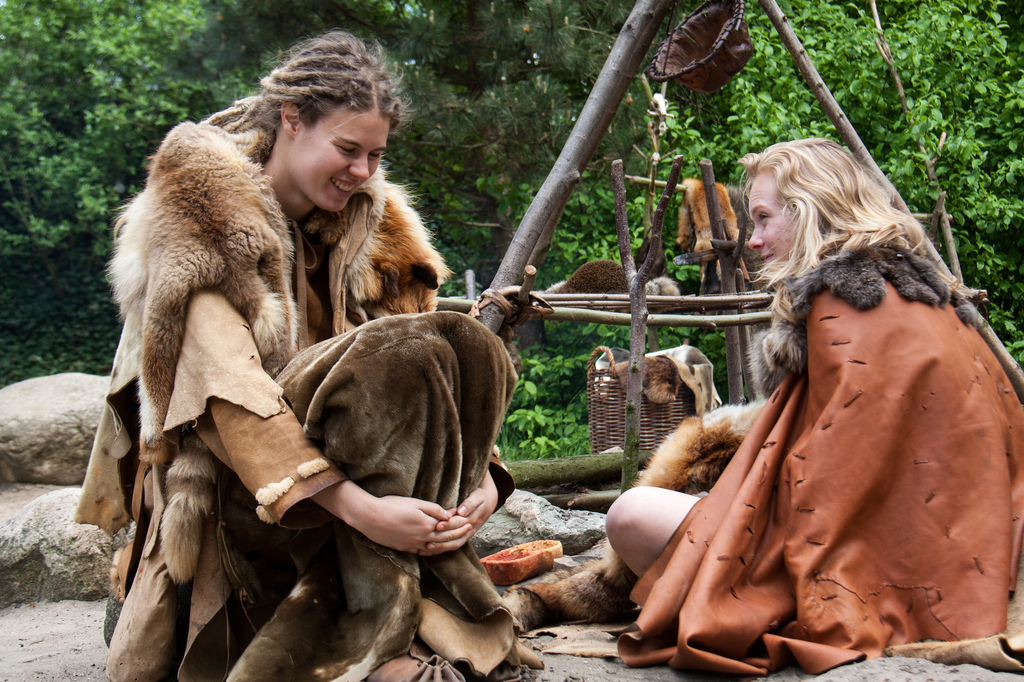
hanss_mesowomenI’m not sure whether it was a one-off or it will be a regular feature, but when I showed up on a misty (we call it fret—fine mizzle), damp weekday the team were experimenting with an acoustic installation on the lawns in front of the museum. Thanks to archaeologist Ben Elliot and sound artist Jon Hughes for explaining it. Standing at the centre of a 30m circle of high-definition speakers one could experience “sounds of the mesolithic”. It was extraordinary: flint knapping, wild fowl, a wild boar being hunted (not dissimilar to a January Sales rush) and more. We chatted about the absence of human voices, but the team are thinking about how best this might be incorporated. For example, what language would one use? Would a rhythmic “dance” or distant “babble” inject the people into the wildscape? I do hope they try something—this really adds a special dimension to the museum’s offering in a similar way to the Scandinavian banter at the Jorvik Viking museum.

Image credit (above): hans s | Foter | CC-BY-ND

Preview Images

Click on images to enlarge | opens new window

OLYMPUS DIGITAL CAMERA OLYMPUS DIGITAL CAMERA OLYMPUS DIGITAL CAMERA

Image Key

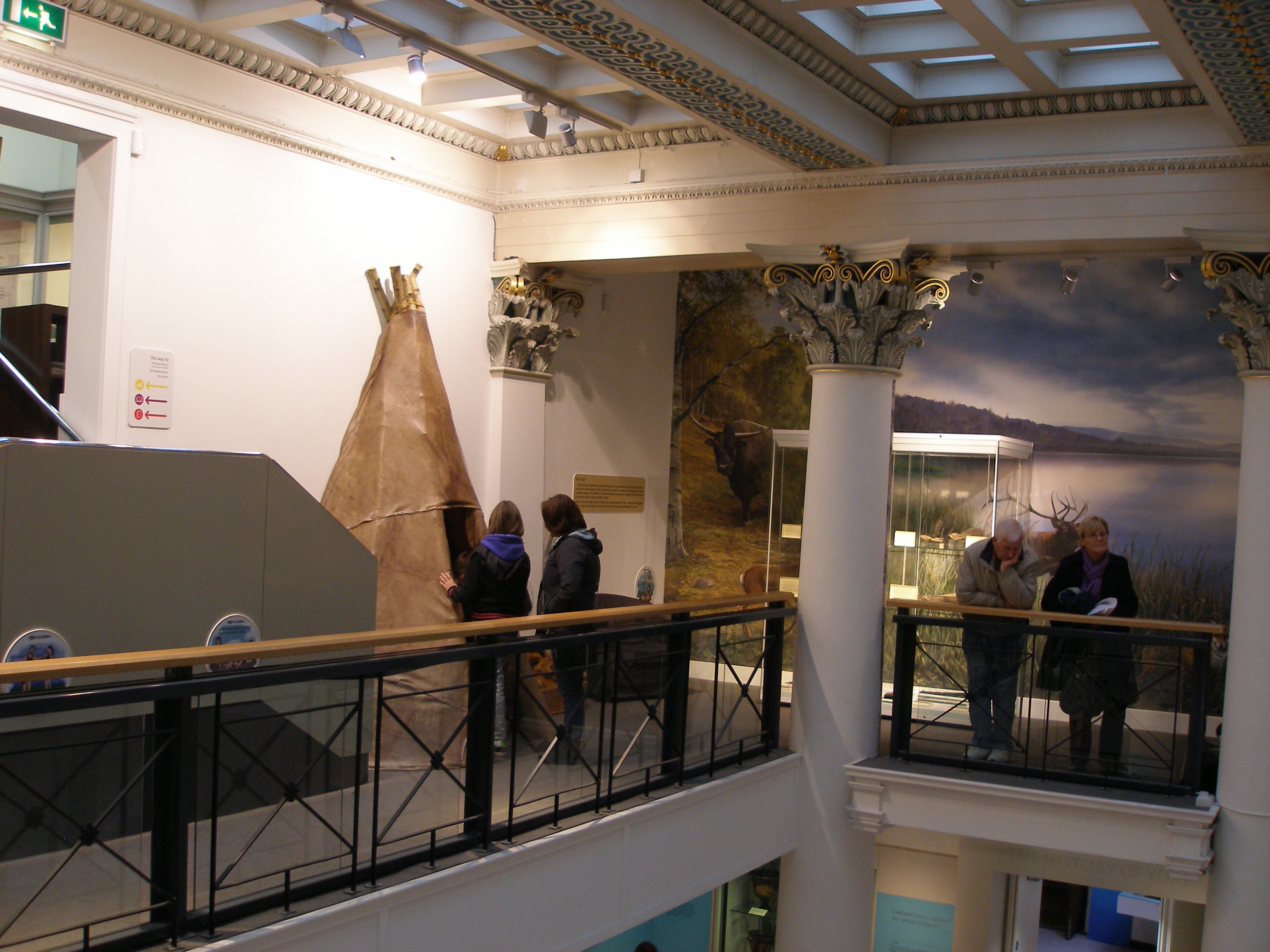
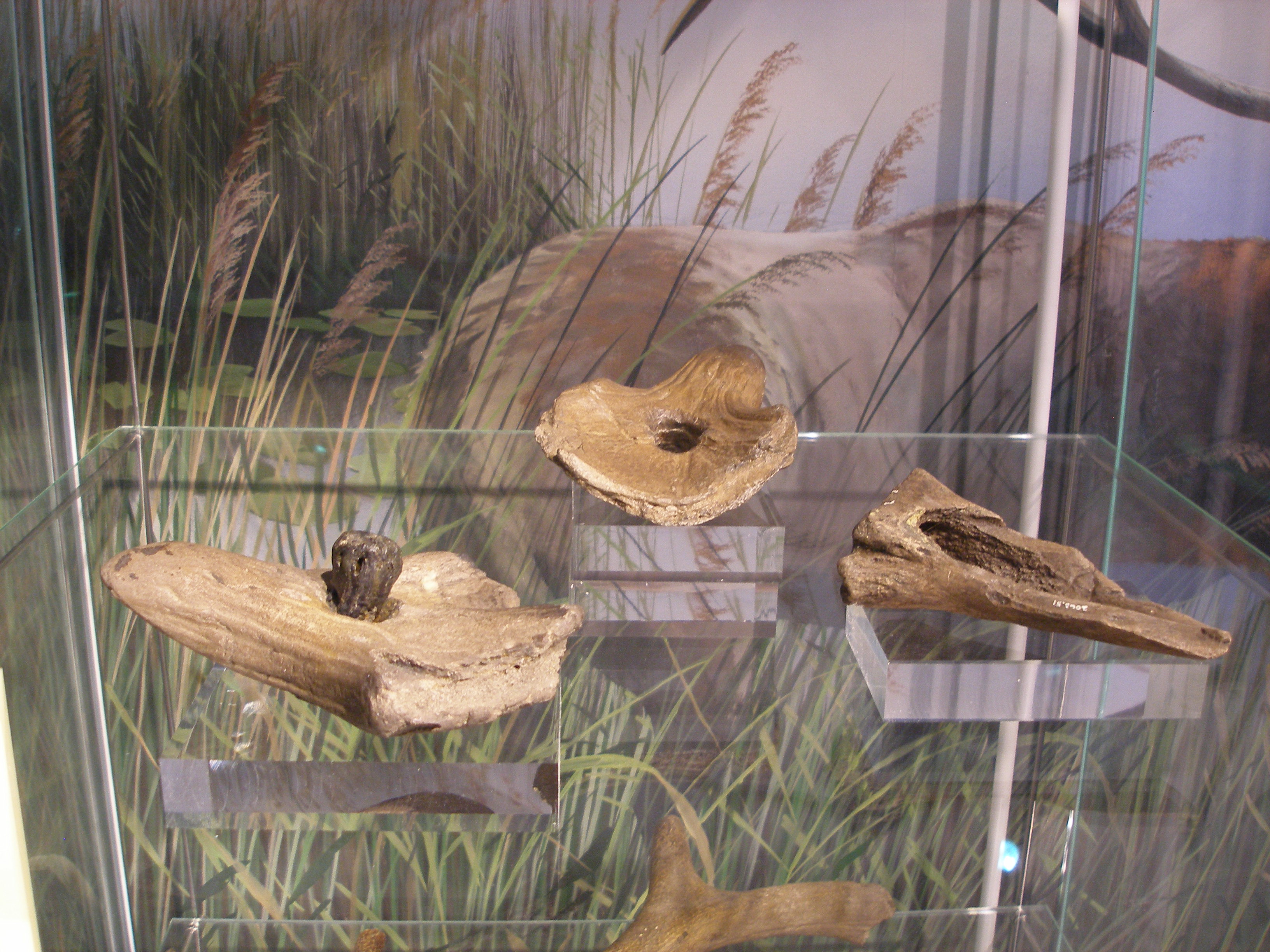
  • Top | L: kids loved the semi-tepee though I didn’t see anybody wearing the furry capes, but I did see some children outside with fantastic home-made card antler frontlets; C: red deer antlers showing groove & splinter technique where thin strips of antler were removed with flint burins, and some barbed points; R: various bone macro-tools, some hafted.
  • Middle | L: aurochs skull (massive wild ox, three times the size of a modern cow); C: barbed points (there are 191 in total) and flint tools, top right are flint nodules (beach pebbles) and a stone fabricator/hammer although most flint was worked with antler soft hammers; R: fire-heated stones used to boil water and slow-cook, with examples of fungus at the bottom, slow-burning/glowing, portable fire-starters.
  • Bottom | L: one of the 21 red deer stag antler “frontlets”; C: an amber “thingy” on the left derived from Baltic deposits and sometimes washed up on the Yorkshire coast, and some “red ochre” (iron oxide) used as a pigment; R: shale beads perforated using flints, and two bird bone beads top right.

Microburin

Digging Seamer Carr 1985-6 | A few Mesolithic Memories of VP85

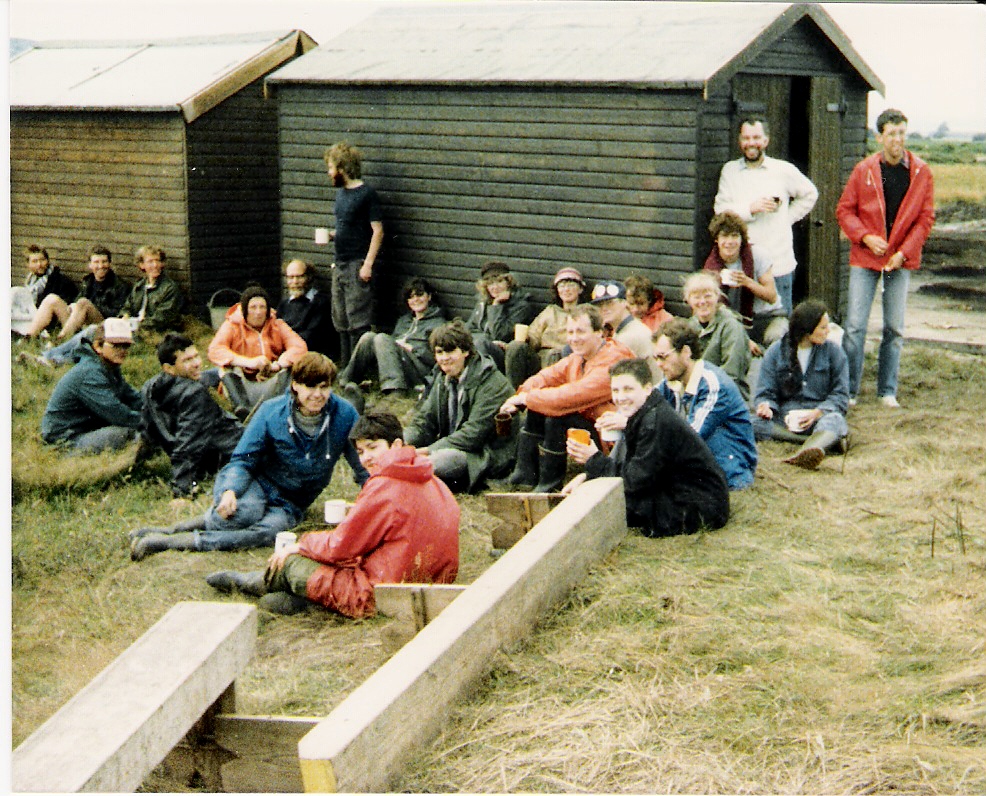
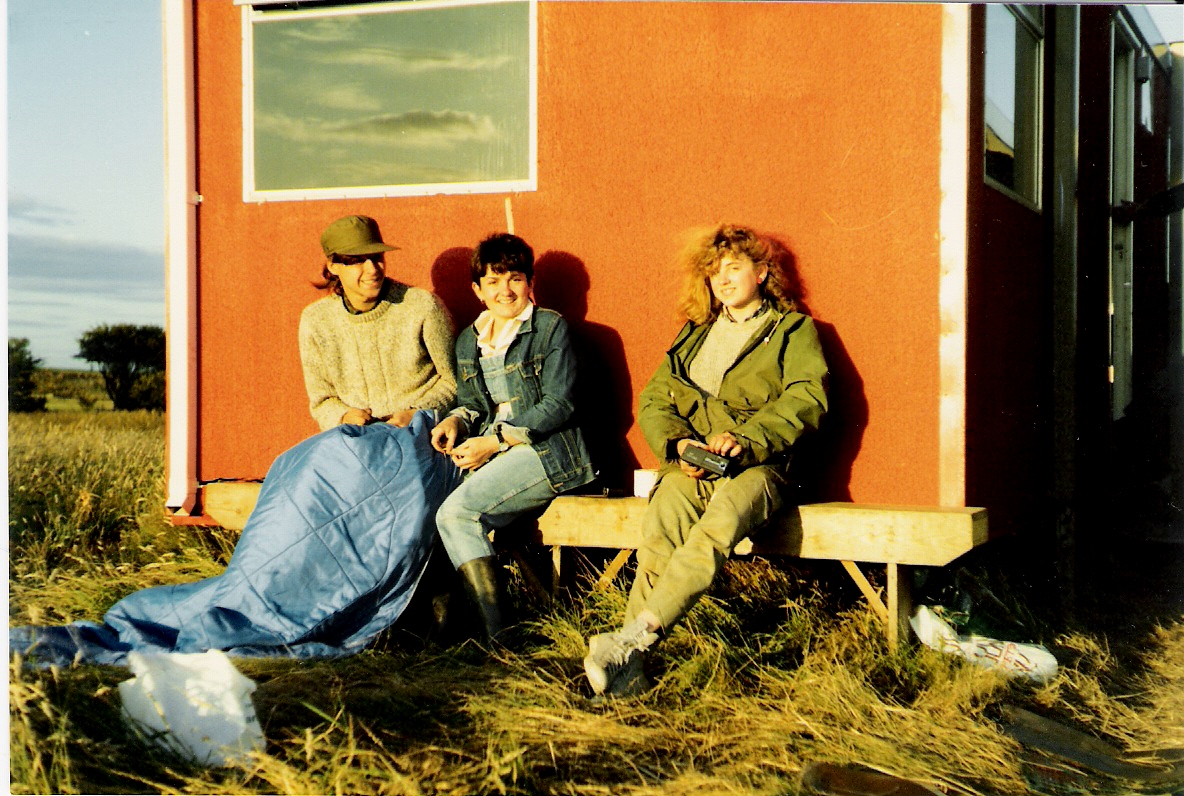
Seamer Carr 1985I came across these old pictures, showing their age a bit (and mine), from the excavations at Seamer Carr, not far from Star Carr in the Vale of Pickering, North Yorkshire.

Located in the path of a whiffy landfill (or more accurately “floating on peat”) site, the open area excavation was part of a bigger environmental project to reveal the extent of post-glacial Lake Pickering (more properly Lake Flixton), on which Star Carr is but one of now many Early and Late Mesolithic activity areas. I like the later stuff most, and at least one microlith array is known (i.e. an arrowhead configuration).

scan0010I was a volunteer under-grad at Durham (1984-7) and when not digging on the North York Moors, East Yorkshire or Poland, recording Anglo-Saxon churches in Tynedale or cataloguing Roman Samian Ware in the Old Fulling Museum attic, I squelched at Seamer Carr and in a few 1x1s at Star Carr.

It rained every day except one. It was one of the coldest summers on record. A force 9 gale laid every tent to waste despite 4 foot stakes—I slept in dad’s car in year 2 and learnt a thing or two about shift gears. We shan’t talk about the Elsan loos, nor about blue not being my favourite colour anymore.

scan0011   scan0009

However, we all delighted in warm team spirit, hot tea, weekly showers, Helen Patterson’s wonderful cuisine, Schadla-Hall dry wit, Ed Cloutman’s auger, fine Yorkshire beer, and laughs at the expense of the last person to be submerged to the waist, or higher, in the sump pit—”soak away” would not be accurate. The lithics were fine (very few on the spoil heap), dead horses emerged (well, one) and a bit of antler at “the other place”. Great memories, dried out, like the peat.

Microburin