Warning | If you don’t want to preview some of the exhibition, don’t click on the images.
Photographs by ◊microburin with kind permission of the Yorkshire Museum (quality subject to lighting conditions and excitement).
 In an earlier post I wrote in anticipation of the After The Ice exhibition at the Yorkshire Museum, York, England. Open until May 2014, the exhibition presents some of the outstanding Early Mesolithic artefacts that haven’t been on display in Yorkshire since the redesign of the Rotunda Museum, Scarborough—which now focuses on the outstanding palaeontology (fossil) collections. Other Star Carr artefacts and ecofacts, dating to between 9300 and 8400 BC, appear in the Museum of Archaeology in Cambridge (University) and (occasionally) at the British Museum—much more remains in stores.
Appreciating that not all readers will be able to make it to York to see the exhibition, and yet not wanting to be a “spoiler” for those that will, here’s a sneak peek at some of the display. Everybody will have their own individual sense of expectation, their own views and take-aways having seen the exhibits and, hopefully, reading the accompanying booklet. It’s a bit tricky to find in the museum bookshop so you may have to ask.
Stone age Tsunami
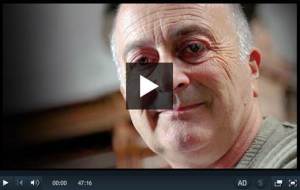 In an unusual clustering of Mesolithic events, Channel 4 (UK) broadcast a long-awaited Time Team Special—Britain’s Stone Age Tsunami—hosted by the inimitable Tony Robinson and featuring the excavations at Star Carr (and Prof Nicky Milner in a deckchair) as well as looking at the 6100 BC tsunami evidence from the Scottish east coast and at sea level rise attested by the submerged forests in the Severn estuary (Wales). The programme, with excellent CGI graphics, is available to watch online on 4OD until 28 June (47min, UK & Rep of Ireland only) | Watch it now »
Acoustic Experience
 I’m not sure whether it was a one-off or it will be a regular feature, but when I showed up on a misty (we call it fret—fine mizzle), damp weekday the team were experimenting with an acoustic installation on the lawns in front of the museum. Thanks to archaeologist Ben Elliot and sound artist Jon Hughes for explaining it. Standing at the centre of a 30m circle of high-definition speakers one could experience “sounds of the mesolithic”. It was extraordinary: flint knapping, wild fowl, a wild boar being hunted (not dissimilar to a January Sales rush) and more. We chatted about the absence of human voices, but the team are thinking about how best this might be incorporated. For example, what language would one use? Would a rhythmic “dance” or distant “babble” inject the people into the wildscape? I do hope they try something—this really adds a special dimension to the museum’s offering in a similar way to the Scandinavian banter at the Jorvik Viking museum.
Image credit (above): hans s | Foter | CC-BY-ND
Preview Images
Click on images to enlarge | opens new window
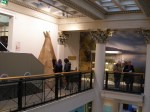


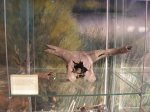
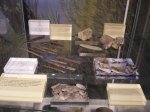
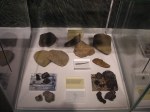
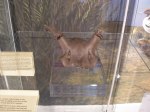

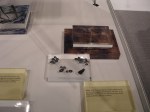
Image Key
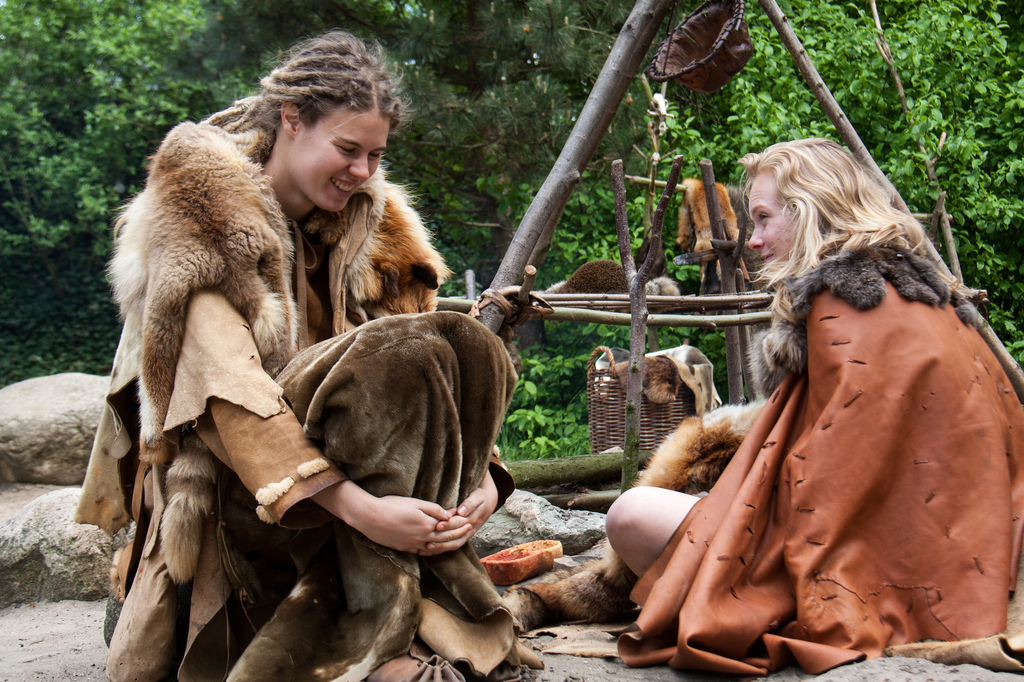
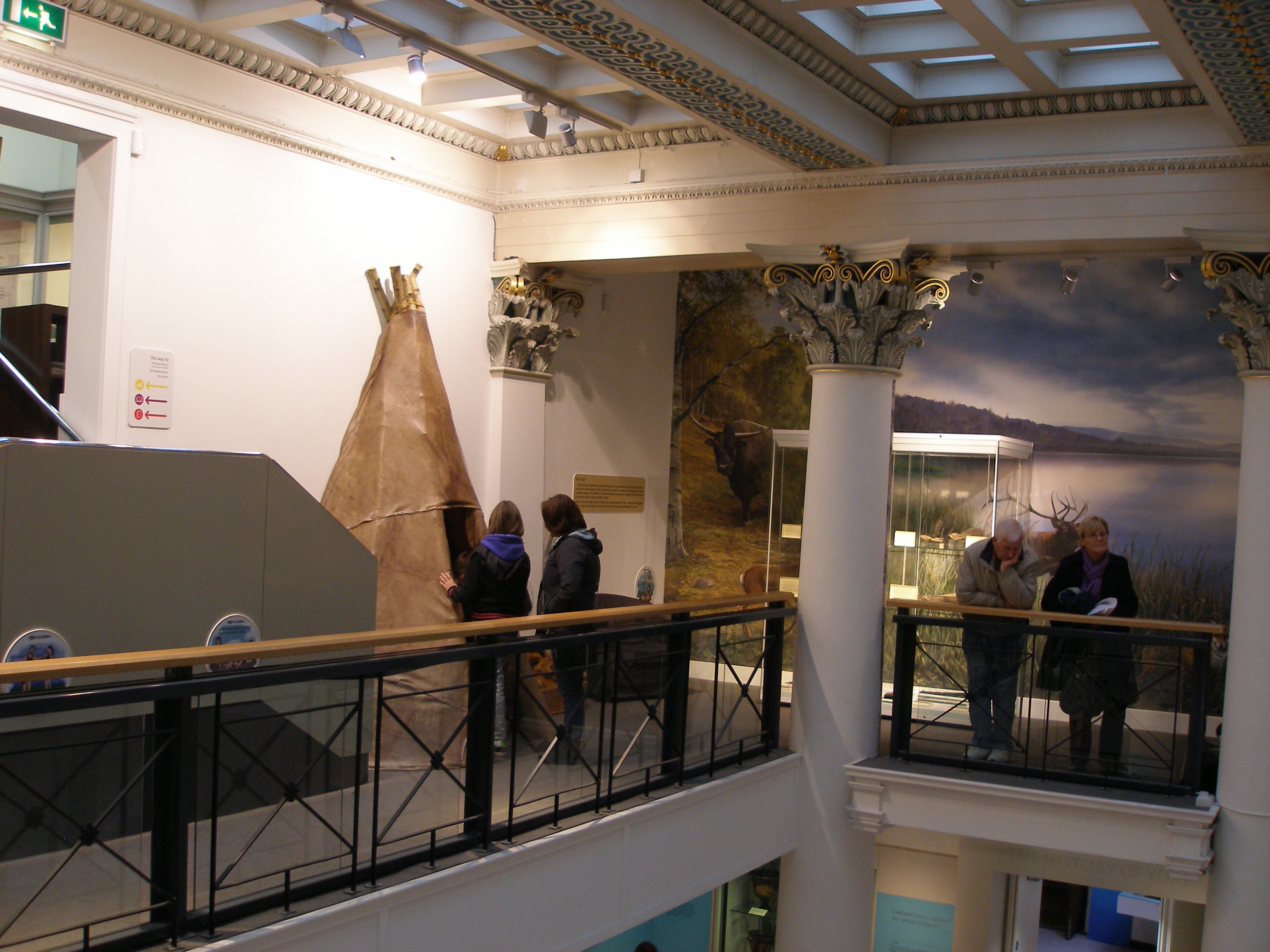
- Top | L: kids loved the semi-tepee though I didn’t see anybody wearing the furry capes, but I did see some children outside with fantastic home-made card antler frontlets; C: red deer antlers showing groove & splinter technique where thin strips of antler were removed with flint burins, and some barbed points; R: various bone macro-tools, some hafted.
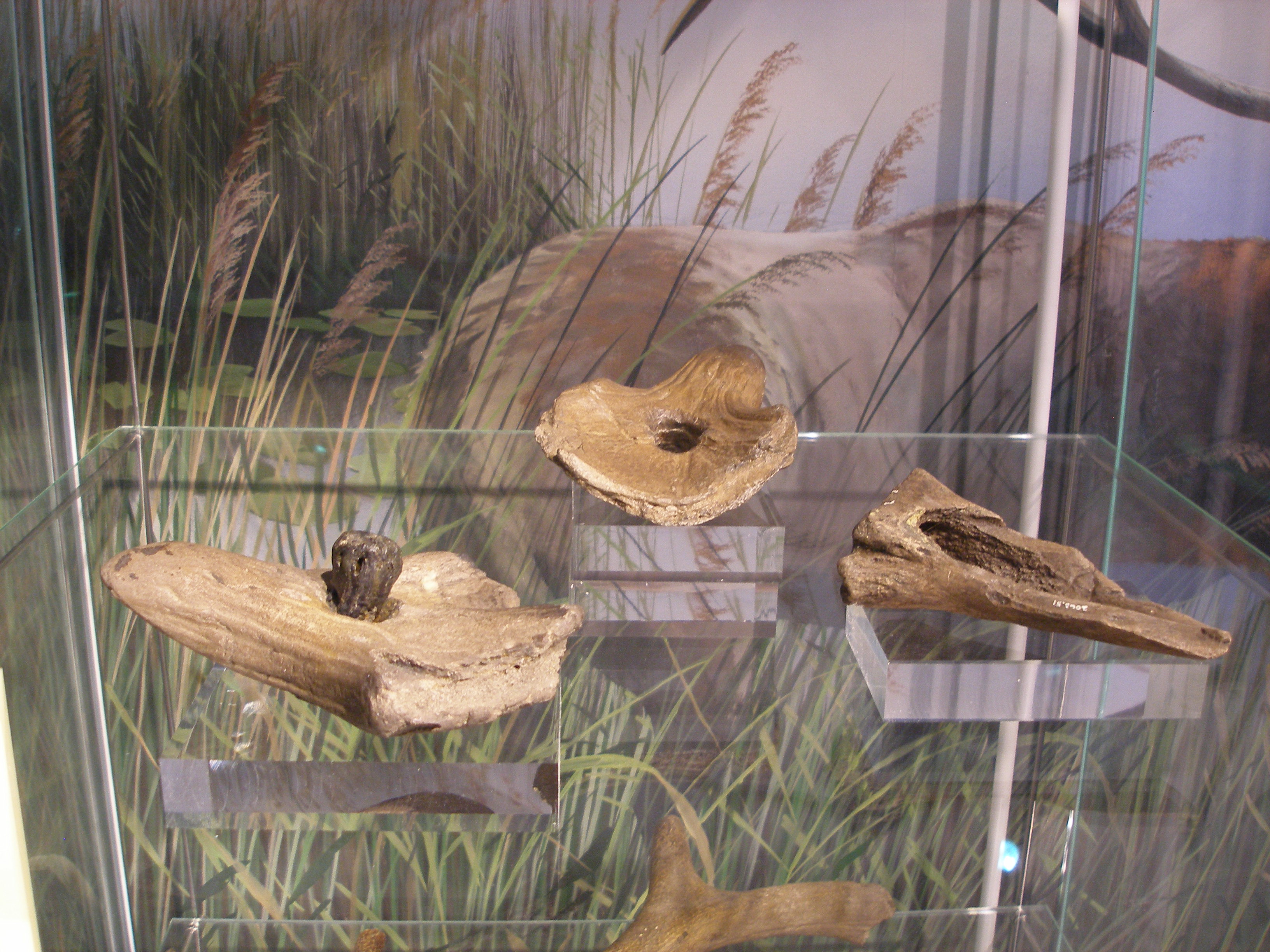
- Middle | L: aurochs skull (massive wild ox, three times the size of a modern cow); C: barbed points (there are 191 in total) and flint tools, top right are flint nodules (beach pebbles) and a stone fabricator/hammer although most flint was worked with antler soft hammers; R: fire-heated stones used to boil water and slow-cook, with examples of fungus at the bottom, slow-burning/glowing, portable fire-starters.
- Bottom | L: one of the 21 red deer stag antler “frontlets”; C: an amber “thingy” on the left derived from Baltic deposits and sometimes washed up on the Yorkshire coast, and some “red ochre” (iron oxide) used as a pigment; R: shale beads perforated using flints, and two bird bone beads top right.
♦ Microburin
 Society News | 2

 Microburin’s



 microburin