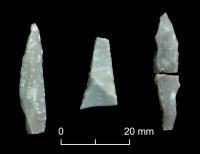
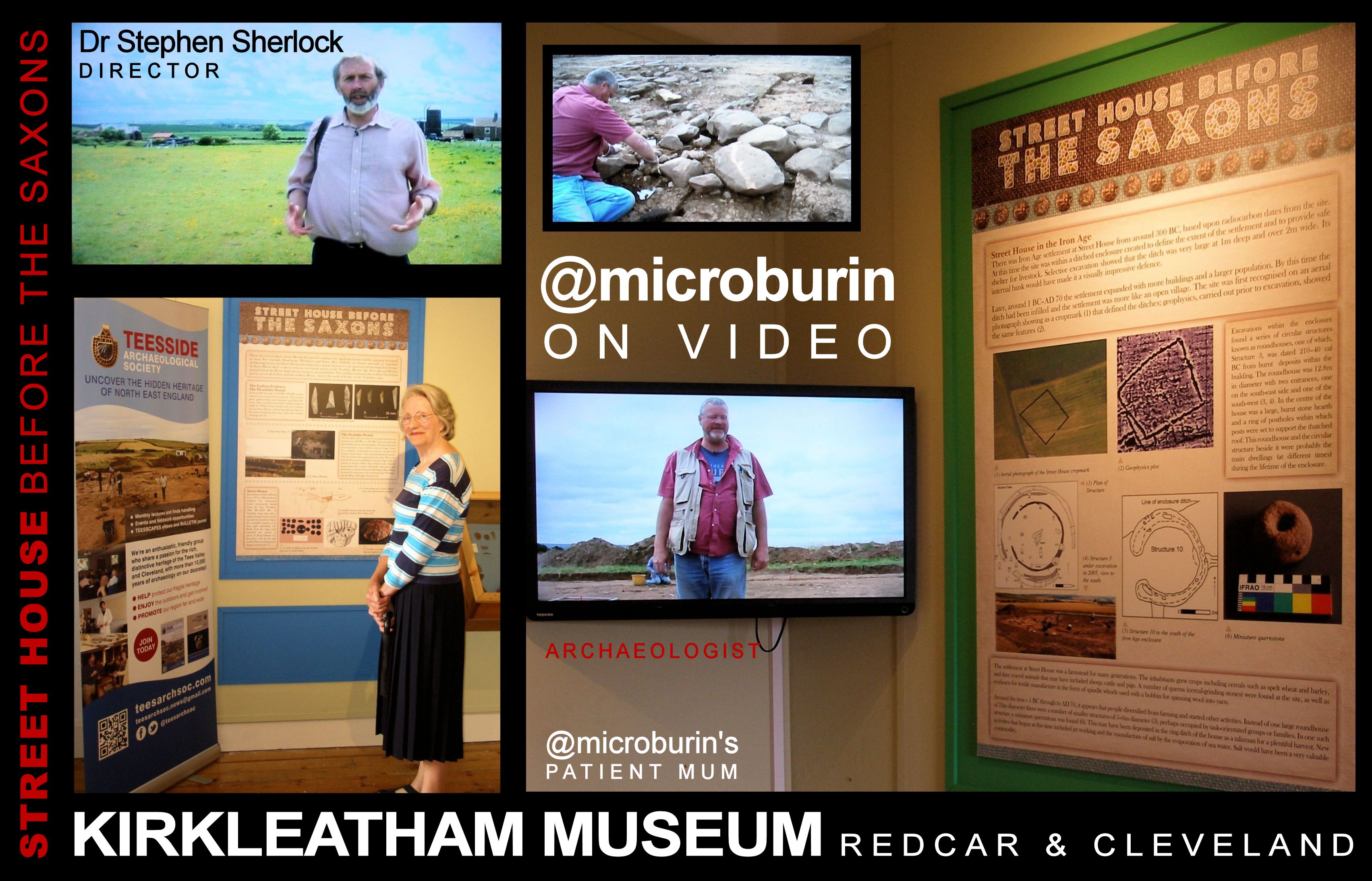
 As if the world isn’t dangerous enough, @microburin is now on video – sounding alarmingly like Prince Harry – at Kirkleatham Museum, Redcar & Cleveland. The video introduces the Street House Before the Saxons exhibition which runs until July 2015. There are a few of my Mesolithic flint images (and text) on the info-boards too.
  The Street House Farm archaeology project has been running since the 1980s under the directorship of Steve Sherlock, archaeologist extraordinaire and the chap currently responsible for the archaeological oversight of the A1(M) works between Leeming and Barton, including Roman Catterick CATARACTONIUM fort and town.
Street House, near Loftus in East Cleveland, has archaeological remains from at least the Neolithic − an early timber mortuary structure – through numerous Bronze Age burial mounds (and a wossit), an extensive Iron Age farming community who were probably making and selling salt, Romano-British canny folk who were manufacturing Whitby Jet objects like beads, spindle whorls and probably pins, with suggestions of continuity into the early post-Roman ‘dark ages’. There are also hints in the lithics of possible Later/Terminal Mesolithic activity, which is right up my street.
Of course, despite many thousands of years of human activity, Street House is probably best known for the Anglo-Saxon Royal Princess buried in a 7th-century AD cemetery, in her bed, with breathtaking jewels of gold and garnet, on permanent display. Do try visit both exhibitions—and peruse the Street House Roman phallus carving from the 2013 excavations?
◊ Spence
 ◊ Skulls, Shamans and Sacrifice in Stone Age Britain | Digging Diaries | 13-Jul-2015 Youtube (2min)
 ◊ Dear Microburins,
 Exciting news reported on social media today. Despite a few questionable media-focused soundbites, Oxford Archaeology have reported something important. Expected to be Bronze Age, cremated (or at least burnt) human bones – a proportion of an entire body – have been AMS-dated to around 5600 cal BC on a developer-led commercial excavation at Langford, Essex. With so few related finds in the UK and Ireland, and even our Doggerland neighbours on the other side of the North Sea basin, generalisations are still as risky, as are any specific conclusions drawn. However, whether or not we are looking in the right places for the deceased, this adds to the record in a valuable way. I suspect the true value will still take us Mesolithic archaeologists many generations to fathom, but good work!
 While my head is down in editorial work –

 microburin